
I've always wanted my photography education on here to be free, so although there is no paywall to any of my -Technique Tuesdays-, any and all support is greatly appreciated. ❤️
PLUS: Donate any amount and I’ll send you a link to the hi-res print version of my studio lighting book.
||
PLUS: Donate any amount and I’ll send you a link to the hi-res print version of my studio lighting book. ||
For many of us, flash is our tool of choice. It’s a tried-and-tested instrument that is like an extension of ourselves. We use them every day, and they can tackle every lighting problem we throw at them. So if flash has everything covered, why am I so excited about LEDs?
Preface: I was recently commissioned by Profoto to produce four campaigns to demonstrate the power and creative potential of their new L600C/D LED heads. The videos and articles on those shoots have already been released (article here: 4 Photoshoots with the new Profoto L600C LED ), but Profoto also asked me to write a second article on my thoughts surrounding LED lighitng, coming from someone who has spent over 2 decades shooting with flash. Below is that second article in full, and you can also read it (in three parts) on the Profoto website here: A New Generation of Lights
Worth the wait?
It’s no secret that Profoto is a little late to the LED party. Many lighting brands have brought several LEDs to market in recent years, so what’s so special about Profoto’s latest offering? Is it worth the wait?
I’d actually been aware that Profoto had been working on a secret LED project for a little while now, so to say I was excited to see what they’d come up with would be an understatement. Thankfully, I was not disappointed. Earlier in 2025, Profoto announced two new cinema lights, but these were different to their previous movie-light-monsters. Their new L600D and L600C were noticeably more compact, and these heads seemed far better suited to hybrid work. Sure, these lights could absolutely hold their own on any TV and film set, but they were also small enough to be used in photo studios without the need for a small team just to get one head on a stand!
For clarity, the L600D is the daylight LED head. Yes, it still has the colossal Kelvin range, but it’s not got the full RGB spectrum the L600C has. For anyone who’s seen my work before, I’m sure you can guess which light I was excited about testing, and yes, the L600C is the head I finally got to play with recently.
If you’re curious to see the results from that campaign, and my initial thoughts on the L600C, then you can find all the details on that shoot here: 4 Photoshoots with the new Profoto L600C LED
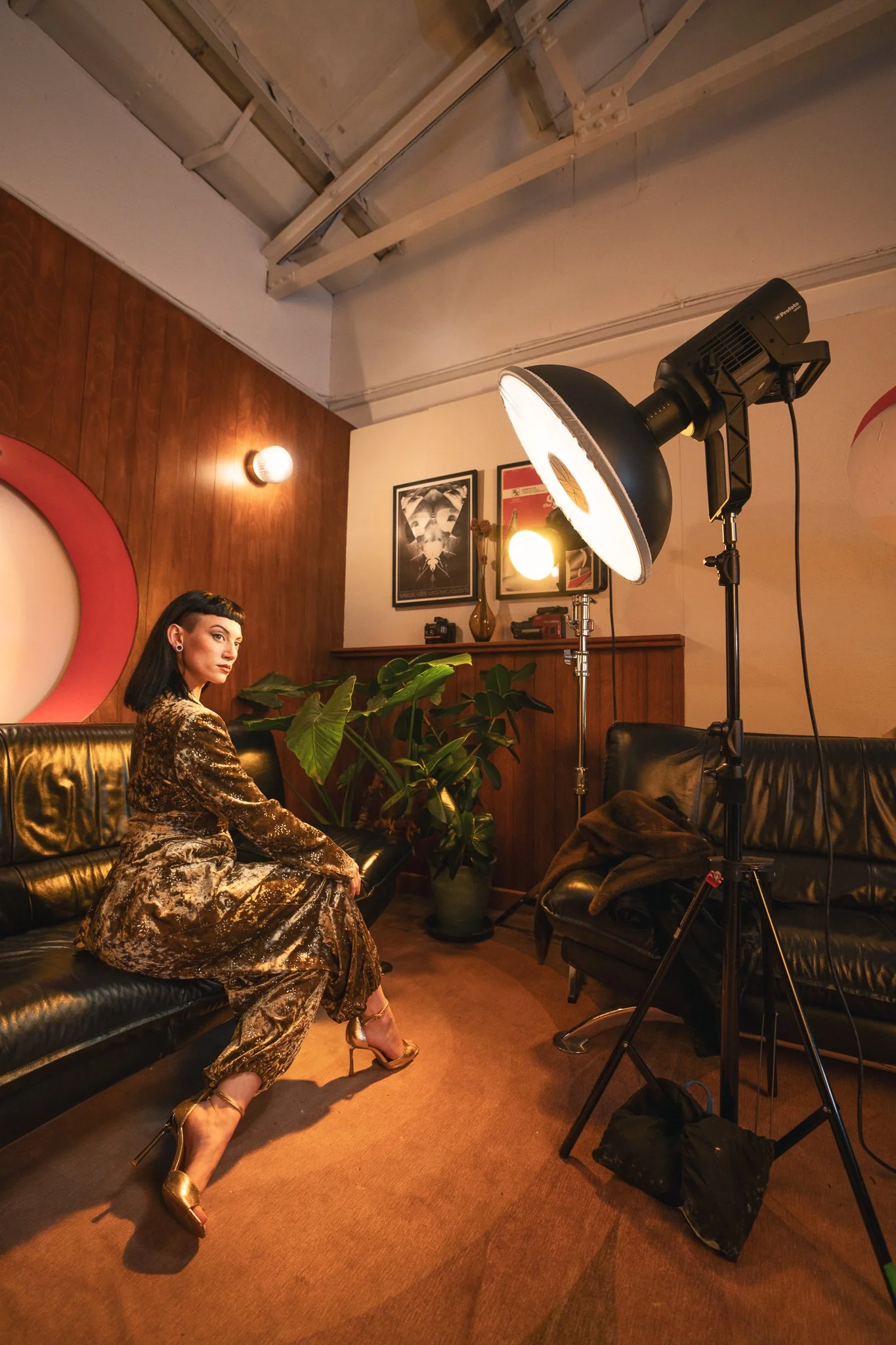
The new Profoto L600C/D LED light can take any of the 100+ Profoto lighting modifiers.
I don’t need any more lights, right?
So, with the Profoto LED prologue out of the way, why am I excited about these new lights and LEDs in general? For context, I’ve been shooting with flash since the late nineties. Flash is absolutely an extension of my arm at this point, so when LEDs were introduced to me by several lighting brands, I was hesitant to say the least. I already have more flashes than I’ll ever need. Flash does everything I want it to, so I don’t need LEDs as well, right?
This was my first mistake. LEDs aren’t simply ‘just another light’; they really do add something unique to my work over flash, it’s just that I didn't know it yet.
I’d argue many photographers are guilty of making that same assumption. “My current lights are fine, I don’t need to replace them.” This is true, and I didn’t replace my flashes with LEDs. I still have my flashes, and I can easily shoot with them alongside my new LEDs. You have to remember that LEDs have come a very long way in recent years. These new 600W Profoto LED heads are seriously bright. These aren’t the crappy 4W LEDs of years ago, and these new LEDs can easily keep up with and work alongside your current flashes without needing to equip your strobes with welding glass first.
Again, I feel it’s worth reiterating the fact that these new LEDs can work alongside your current flashes. This isn’t a DSLR-to-mirrorless situation, where you had to sell all your old lenses and start again. You can add LEDs to your current lighting lineup one light at a time if you’d like, and then simply introduce LEDs into your setups as you would your older flashes.
Are there any benefits to shooting with LEDs?
This is the part that I’d initially overlooked. Can LEDs really offer me anything different or unique compared to my flashes? It’s here that I have to avoid sounding like a car salesman, but I’d urge you to look at LEDs with their ‘benefits’ in mind and not just their ‘features’.
Sure, it’s very easy for me to sit here and list off the L600C’s features. The industry-leading TLCI 99 offers unrivalled colour consistency. It’s 16 million+ colour choices, offering more colours than you could ever need. The liquid cooling in the head eliminates the annoying control box and power brick from dangling around the stand. Flicker-free 16-bit dimming offers flawless control… and this very comprehensive feature list goes on and on, and I can outline the key ones at the end. But these are the features of the light. How do these features of LEDs actually benefit us, photographers?
I’m happy with my flash. Aren’t I?
I know for a fact that you’ve all experienced this at some point. That thing you never thought you needed until you had it. Heated car seats. Non-stick baking trays. Dishwashers. And for us old folk, autofocus. These are solutions to problems we didn’t know we had, and this new generation of LED lights is doing precisely that.
For well over a decade, I had a few packs of coloured gels with a good mix of colours that I could gaffertape to my flashes. I was good with that. I had some colour temperature gels that I would somehow smother my softbox with. I was good with that. I had a tungsten modelling bulb that wasn't the same colour as my flash, and it melted my gels. But I was good with that.
We’ve been dealing with these inconveniences for so long that we’ve actually forgotten they were a problem.
I don’t need to be a professional salesperson here to demonstrate how LEDs immediately eliminate those ‘inconveniences’.
But if you’re someone who's happy with manual-focus lenses and melting your coloured gels, can LEDs offer you or your work anything unique? This is the part that I find fascinating about LEDs. They really can offer us some unique properties that flash simply can’t and most of them, I’d never even thought of until I started playing with them.
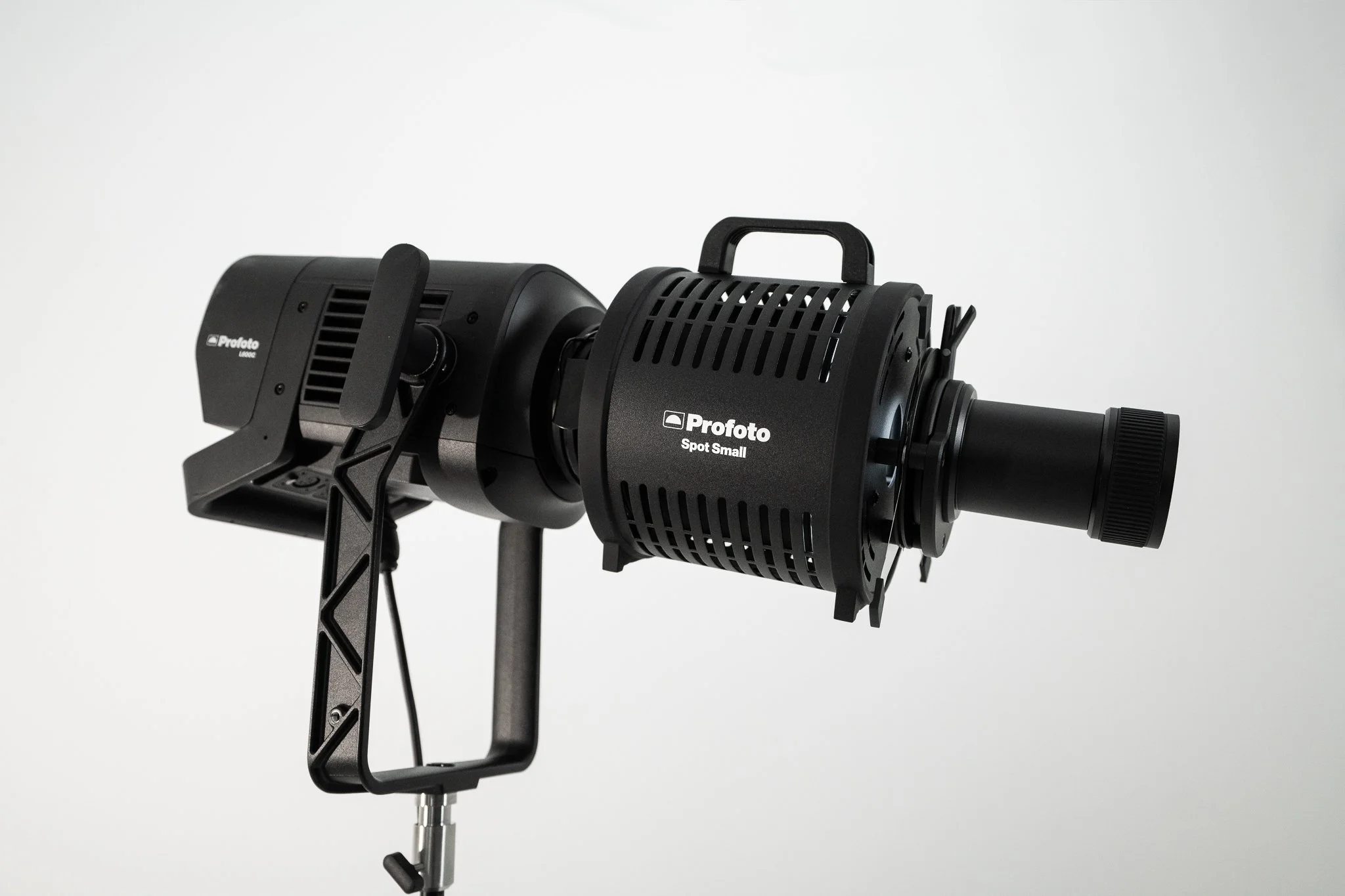
These new Profoto L600C and L600D LED heads are incredibly quick and easy to set up, thanks in large part to their lack of an annoying control box or power brick dangling from the stand!
Are Hybrid Shooters the New Photographers?
Many of you know that LEDs are great for hybrid shooters who shoot stills and video. I’ve been a professional photographer for a very long time, but I don’t shoot video. I never have. I don’t have video anywhere on my site. I don’t advertise or promote it. Yet, I still get asked to shoot video. I’ve managed to avoid it so far, as it doesn't interest me, but clients still ask for it.
Thankfully, I’m established, and if I play my cards right, I could probably skate through the rest of my career without having to shoot portrait orientation videos of a group shot or edit a 15-second reel of a 3-day photoshoot. But I’m old. Do you think a young person entering the industry today will be so lucky? Not a chance. The next generation of photographers will absolutely have to shoot video as well as stills. So, do you think a new photographer will purchase two sets of lights? One set of flashes for stills and one set of LEDs for video? I know you know the answer.
Breathing Portraits
So are there any benefits to these new ‘video’ lights for us still shooters? One aspect of flash that I’d forgotten about is that it always freezes the subject stock-still in razor-sharp clarity. You can’t dial that back. No matter what shutter speed you use, a flash typically records the scene at around 1/4000th of a second. You can’t capture someone ‘kinda still’ with flash. This is no longer the case with LEDs, and finally, us studio shooters can dust off the shutter speed dial on our cameras and start to use it as a creative tool and not just a technical one.
Trigger Warning: I’m about to lose some of you, so I apologise, but I’ve started to shoot some studio portraits at 1/30th and even 1/15th of a second!
For those of you still reading and with my studio-lighting heresy aside, these far longer shutter speeds, in conjunction with the continuous LED lights, allow for the subject to come alive in a portrait. In a time when many photographers use the same camera from the same brand, modern photography can start to look a little homogeneous. Couple this with generational distrust of imagery thanks to AI, and this very modern, clinical look to images can leave people cold when they view them. To be clear, there is absolutely a time and place for very polished and pristine photos where we can see the DNA in every pore of the subject’s skin, but if you’re after something with a little more story to it, a very slight sense of movement to the image can give it a little extra life.
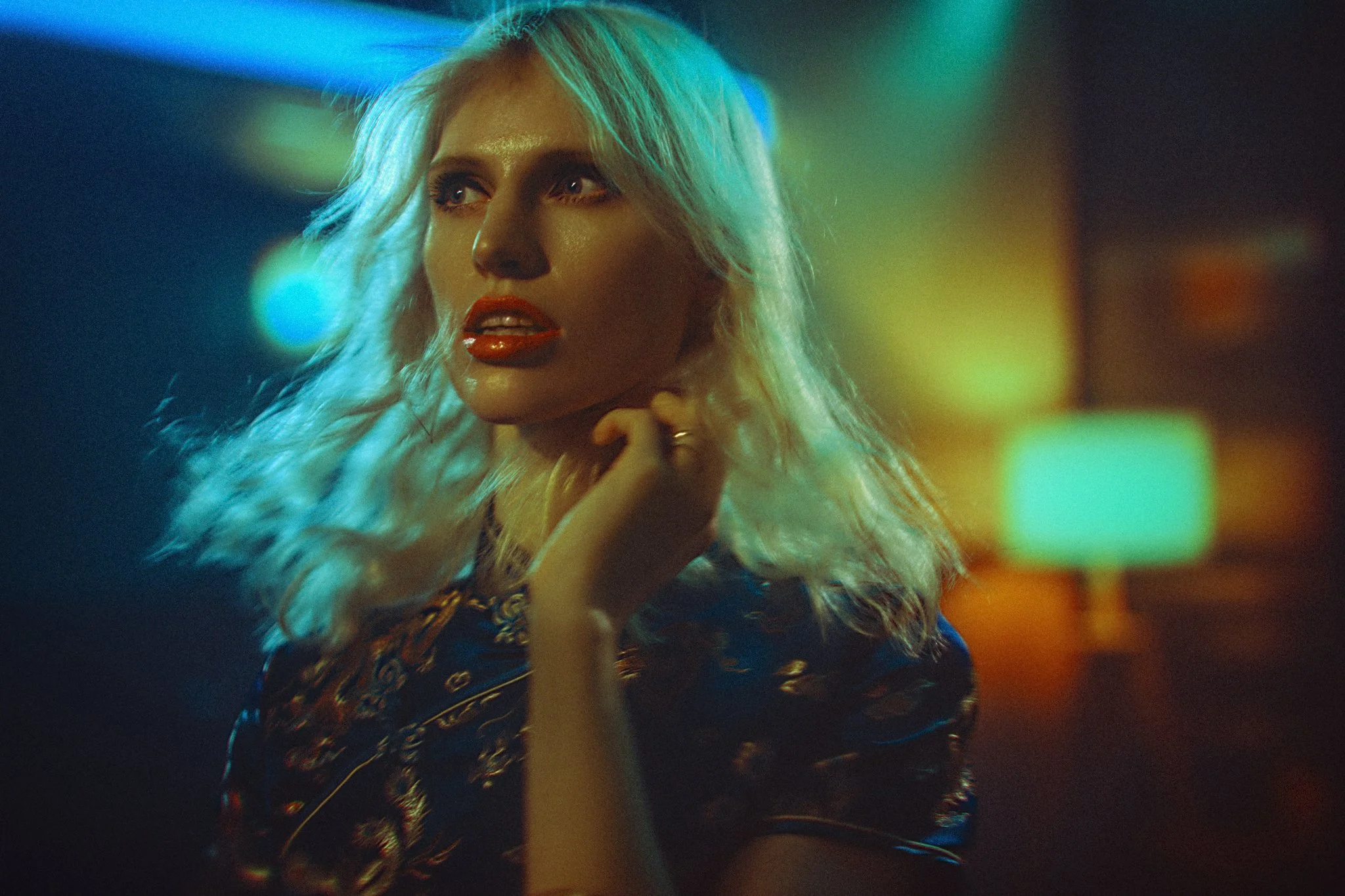
Image shot with LED lighting only and with a camera shutter speed of 1/15th of a second. No, not everything is pin-sharp, but continuous lighting from LEDs does allow us to capture a little more motion and story in our images, as the shutter speed can once again be used as a creative tool.
The portrait above was shot at 1/15th of a second. Yes, there is some movement in the image, and no, the eyes aren’t pin-sharp due to some slight movement, but that all adds to the image's story. The hair in this shot has even more motion to it, and the image as a whole feels a lot more alive, and dare I say ‘cinematic’, than if I’d shot it with a flash at 1/4000th of a second. Again, there is a time and a place for this, and I certainly don’t shoot all my shots 1/15th of a second, but LEDs and their continuous light now give me options that I simply didn’t have before.
Unique Colours
Don’t panic, I’m not claiming LEDs have invented any new colours, but with their advanced interface and the way they seamlessly switch to different colours instantly, they can offer some truly unique colour-looks that simply aren’t possible with flash.
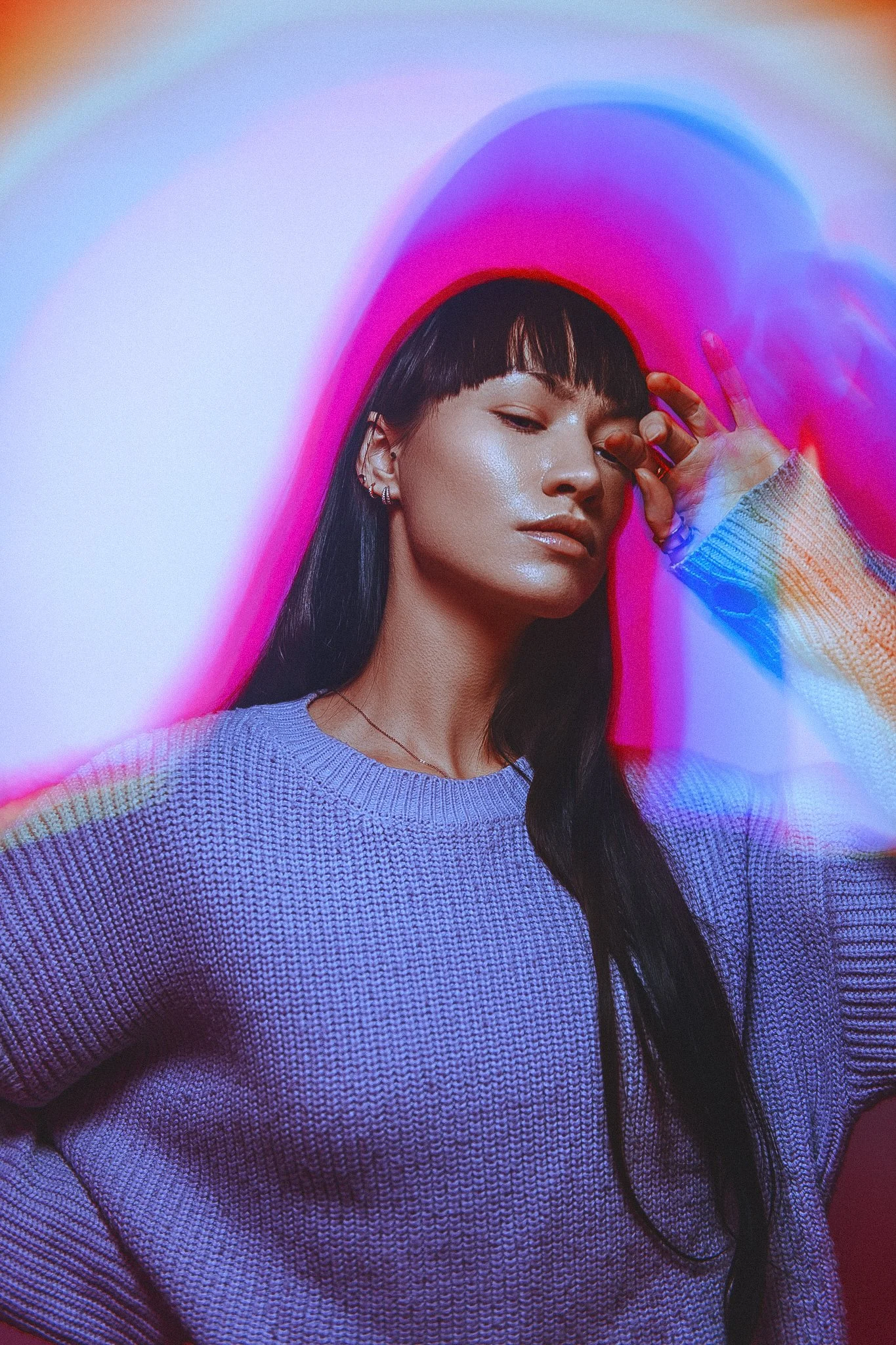
In the images above, I’m using a pre-programmed LED colour effect to seamlessly change the colours during a long exposure, and you can see the varying colours being displayed on the background. This technique of using the looping LED colour effects during long exposures has a ton of scope, and its possibilities are still largely unexplored. I’m certainly looking forward to delving deeper into these new LED effects.
Kelvin as a creative tool
For those of us who’ve been shooting for a little while, we’re probably pretty familiar with the Kelvin range and how to use it to ‘correct’ some of the lighting issues we might encounter. One of the biggest surprises for me with LEDs was just how much I use the Kelvin range on these new heads. Sure, we had colour temperature gels with flash before, but they were fairly limiting. Yes, we had 1/4, 1/2, and full CTO (colour temperature orange) and CTB (colour temperature blue) gels before, but they were nowhere near as flexible or as comprehensive as a simple Kelvin slider on nearly all modern LEDs. Plus, those gels were a nightmare to use on larger modifiers and gelling a 4ft octa with a CTO was not only time-consuming and costly, but also a massive pain in the ass.
Now with LEDs, you simply turn a dial, and in seconds, you have whatever Kelvin your heart desires. And this is something I utilise on nearly EVERY photoshoot I do. You can spot a flash shot a mile away, as it's often the base 5500K, and every shot looks the same because of it. Now, if you want to tell more of a story with your subject or scene, you can choose a Kelvin colour to match the tone. Warm up the key for a more organic and natural look, or cool it down for a more industrial and colder look. The Kelvin slider on LEDs is a great example of a tool I never thought I needed, and now I use it on nearly every shoot.
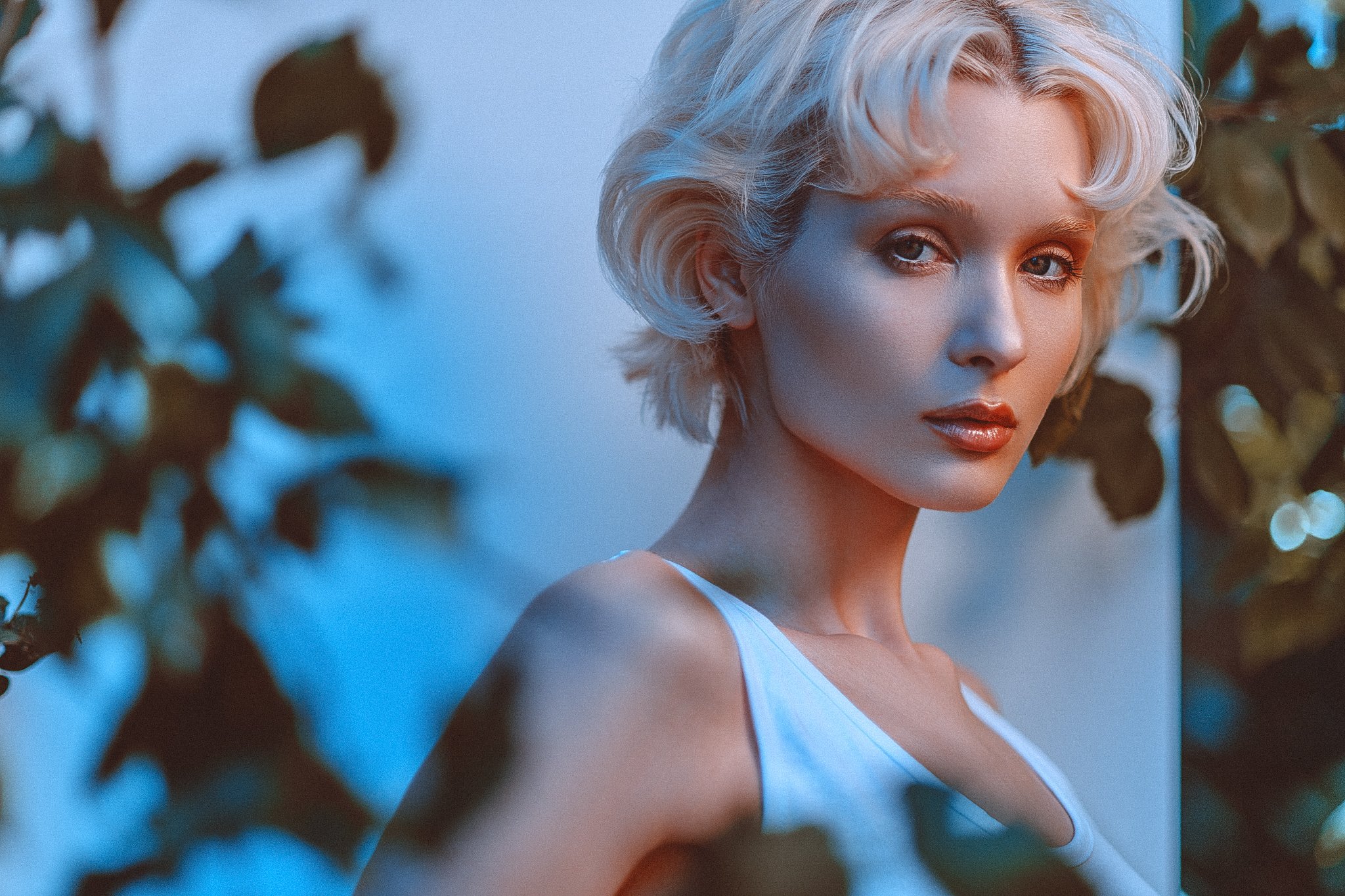
Having the ability to so quickly and easily adjust the Kelvin of your lights, allows you to use Kelvin as a creative tool, not just a corrective one.
In the image above, I’m using an LED to light the model's face, and you can see it's set to a very warm Kelvin. The other blue tones you see in this shot are actually daylight, and I’m using a combination of extremely warm Kelvin to contrast the colder daylight, then balancing it in-camera via the white balance. Firstly, yes, you can use these powerful modern LEDs outside in conjunction with daylight, and second, this setup takes seconds to achieve thanks to the convenience of the onboard Kelvin slider. It’s also worth noting that the new Profoto L600C/D lets you crank the Kelvin range to the proverbial 11! Most modern LEDs have a Kelvin range of 3000K to 6500K. But thanks to Profoto’s unique triple-white chip technology, their new LEDs have a staggering Kelvin range of 2000K to 15000K! This vast range allows for some truly beautiful colour temperature contrasts, and you can see me playing with those extremes in colour in my recent shoot with the L600C.
Saturation is now a choice, not a given
The idea of colour saturation as a creative choice at the point of capture is a new one to many. Historically, we’d have coloured gels on our lights, sure, but for the most part, those gels would be very saturated. In most coloured-gel shots you’ve seen in recent years, the colours are vibrant, and the saturation is cranked to the max. Yes, there were softer, pastel gels you could purchase to achieve a more subtle colour, but they were limited, offered a very delicate colour and were tricky to use because of it. Today, one of the most powerful tools a modern RGB LED has is its saturation slider, yet almost nobody uses it. So, again, if you want those beautifully soft and delicate pastel colours, LED lights make it infinitely easier to achieve.
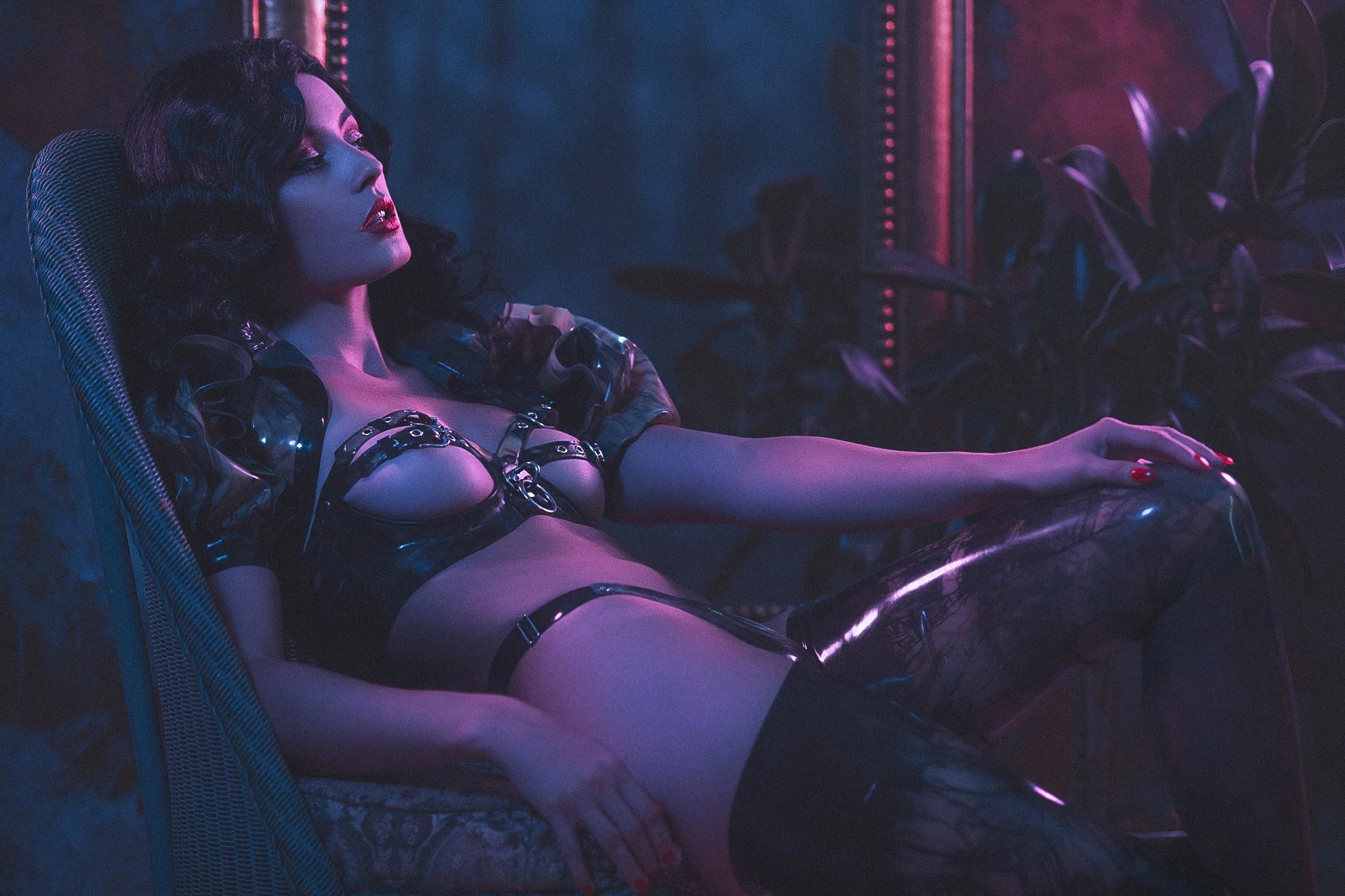
Having the ability to adjust the saturation of all your colours instantly, is a great example of a feature that I never I knew I needed until I had it.
In the editorial above, the styling called for the model to be bathed in softer, pastel tones so as not to drown out the outfit. The saturation slider on the RGB LEDs lets you achieve this look instantly and enables you to make precise adjustments to get the tone you need.
Incredible colour control
I loved coloured gels. In fact, for those who are aware of my work, I have sold hundreds, if not thousands, of my personal gel packs over the years. If anyone was invested in gels, it was me. But the creative in me is sadly stronger than the businessman, and I simply couldn't resist the pull of millions of colours these new RGB LEDs offer.
Even at the peak of my coloured-gel career, I probably only had and used around 15 or 20 colours! Today, nearly every RGB LED on the market has infinitely more colours than that, and the best ones now tout over 16 million! But do we really need that many colours? Well, no…. until you do.
One of the core aspects of any good colour image is harmony and balance. No image contains just a single colour, and so the job is often about choosing the best colours to go together. Sometimes you're using colour theory to do this, and other times you're simply matching colours to styling and backgrounds. It’s this last part that can make gelled lighitng tricky. After all, it’s unlikely you have the specific green gel to match the model's green leather shoes, or the exact pink gel to match the cyberpunk backdrop. This is where those 16 million colours become invaluable, as they allow you to finetune and select the exact tone and saturation of the light to match whatever you’re photographing. So no, you don't need all 16 million colours… until you do.
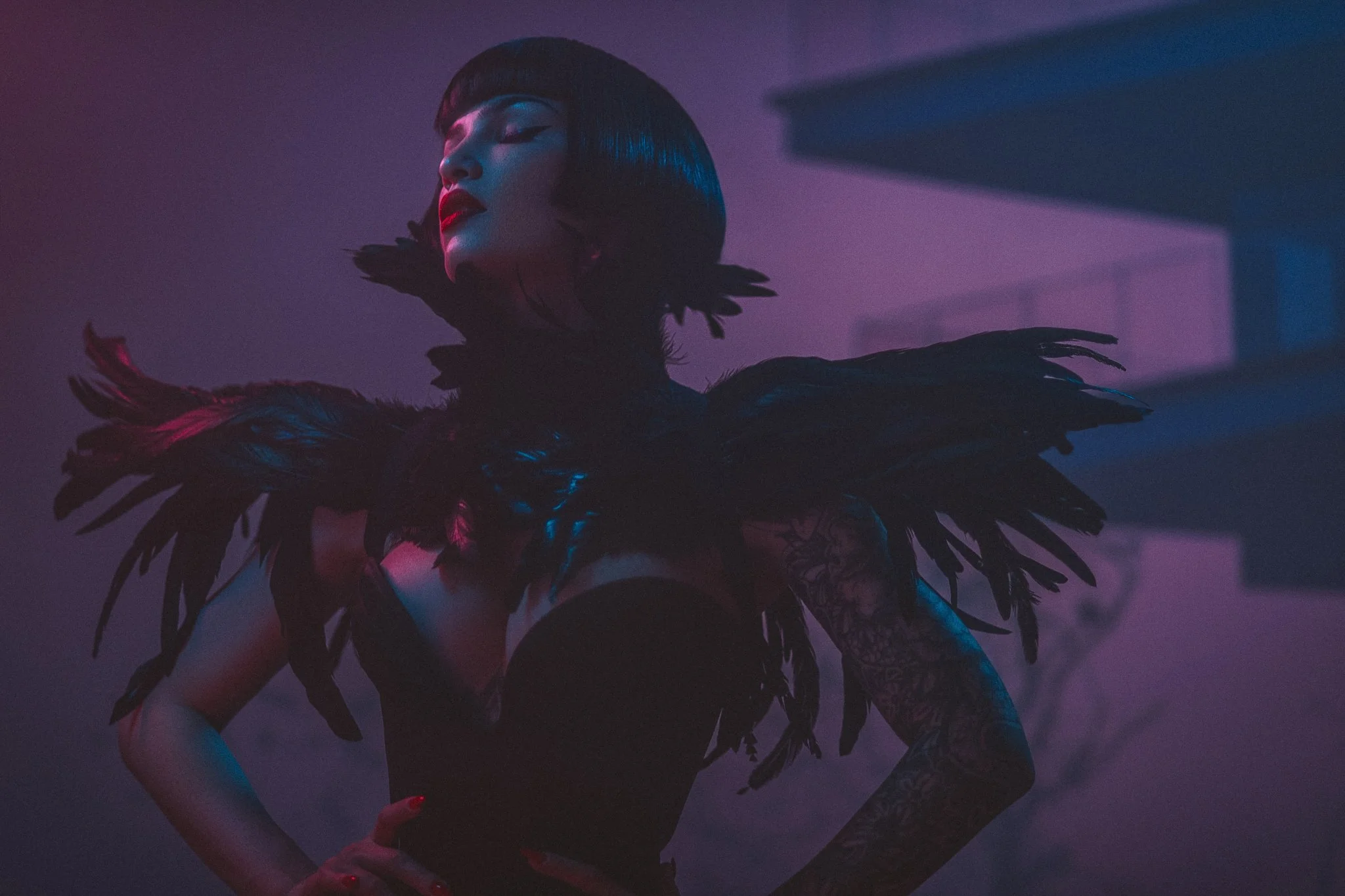
Matching colours on set has never been easier. Not only do you have every colour imaginable at your fingertips, but you can also see how they look in real-time thanks to LED.
In the shoot above, I had to match the model's pink-coloured light to the background's pink colour. With RGB LEDs, this is extremely easy to do. Plus, since this is continuous light, it's just as easy as turning the colour dial until the colours match. With gels, this is infinitely harder to do, as you’re having to balance Kelvin differences between the background and foreground, plus the modelling bulb showing you the actual colour will often be a different colour to the flash bulb that will ultimately fire and display the final colour! Can you start to see why LEDs are becoming more than just a convenience now?
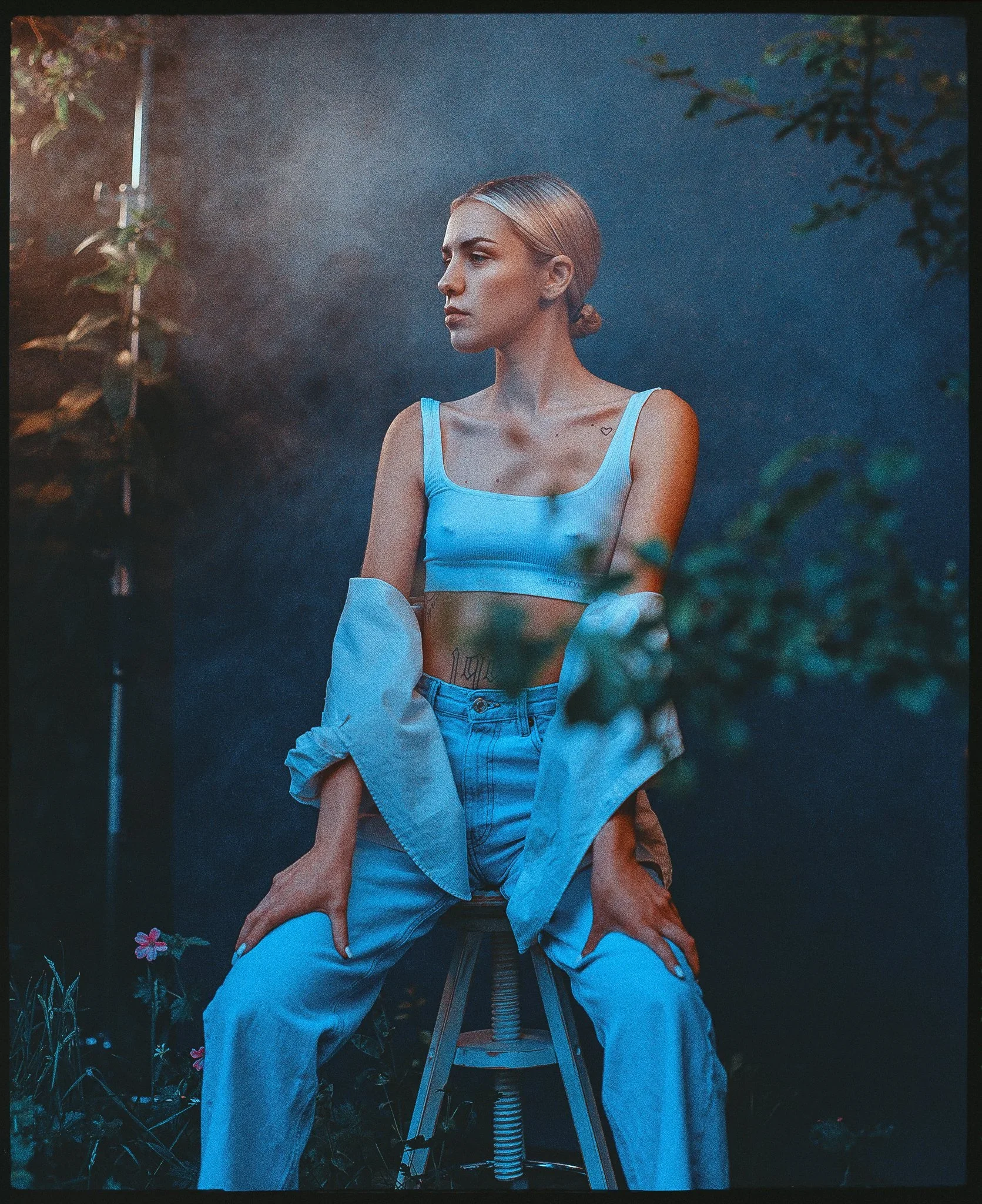
Portrait captured with the ‘vintage’ Pentax 6×7 from the 1970s, on Kodak Portra 100. This image was taken outdoors with 2 LED lights, and thanks to LED lights no longer needing to sync with our cameras, it’s never been easier to shoot analogue film portraits.
Pre-Vintage… Relics?
Ready to feel really old? Believe it or not, there are young adults today who not only don’t know the difference between an A-to-Z and a Yellow Pages, but also refer to early-2000s digital cameras as ‘vintage’.
If you recall, there was a brief window in time when point-and-shoot digital cameras took over from analogue film cameras. It was a digital gold rush, with camera manufacturers like Sony, Nikon, and Canon leapfrogging one another with their latest releases. Every few months, a new model would hit the market, each one touting more megapixels, more digital zoom and larger screens than their competitors. Of course, this all but came to a grinding halt when Apple announced the iPhone in 2007. Steve Jobs put a camera in everyone’s pocket almost overnight, and with it, the battle for consumer-level pocket digital cameras lost its momentum. It’s this fleeting window in time when digital point-and-shoot cameras were in the limelight, and, shockingly, it's these early digital cameras that the TikTok generation now refers to as ‘vintage cameras’. Thankfully, you and I know differently. We know that the real vintage cameras are the ones that aren’t digital at all. The real vintage cameras are the ones that took almost infinite patience, a lot of confusion and tears, and most of all, an awful lot of money wasted on film.
So with all that in mind, I’m sure you’ll all be overjoyed to hear that it’s now once again time to gird your wallets in preparation for the new analogue resurgence thanks to LEDs. That’s right, now that LED lights are powerful enough, we can use them with our old vintage cameras without the excuse that we can’t sync our strobes to the old tech! You’re welcome.
Joking aside, I have genuinely been enjoying shooting with some of my old film cameras again, thanks to LED lighting. No, syncing flashes to old cameras wasn't impossible, but even with the old leaf shutters, plenty of misfires happened, and if you recall, every misfire costs you money. LEDs have thankfully made my film photography far more consistent and, dare I say it, far more enjoyable.
The Best of Both
Much of what I’ve discussed above highlights some extremely functional benefits to working with LEDs. Some of them are truly unique to LEDs in general, but there is one final feature found only on this brand-new Profoto L600C LED light.
It’s a truly remarkable feature and one that has the potential to be fundamentally game-changing to photography.
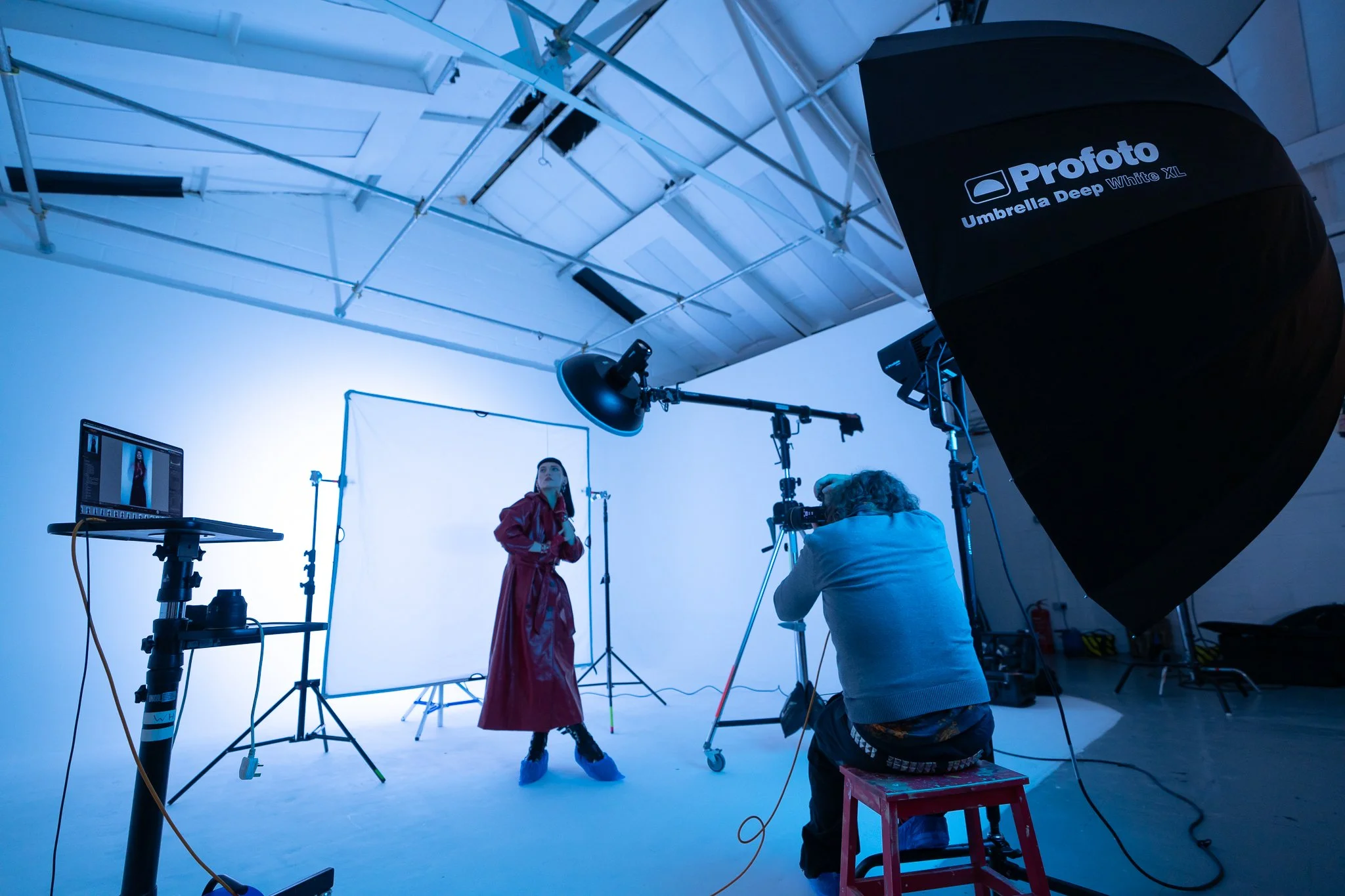
The new Profoto L600C and L600D LED heads can both be used in continuous or flash mode and they can even shoot both simultaneously.
The L600C Can Flash
At first, it may not make sense as to why I think this is such a big deal. After all, I’ve just spent all my time up until this point telling you that you no longer need flash, only to turn around and tell you that flash is a game-changer.
To be clear, the Profoto L600D can flash as well; it’s just that it only flashes in its vast Kelvin range. It’s the L600C that can flash in all 16 million+ colours, which is what makes this light so impressive. Yes, we’ve had other LED lights dabble in flash in the past, but the L600C is, to my knowledge, the only LED light in the world that can flash in full RGB and is modifiable. Yes, you can benefit from all the features I’ve listed so far, and you can do it all with any of the 100+ lighting modifiers Profoto has to offer. You want pastel colours in your beauty dish? Done. You want your extreme 15000K in a softbox? Done. You want your RGB flash in a hard-light spot? Done.
Flash is far from dead, and there are still many benefits to be had from flash. The only difference now is that between the new L600C and L600D, you can have the best of both worlds. You can have all of those incredible colours and Kelvin options, but you can do all of that with the flash function on these LED heads as well.
It’s worth noting that I’m using the term ‘flash’ generally here. These lights don’t contain any xenon tubes or anything; they are simply synthesising the very short pulse of light we are familiar with seeing when using strobes. The tech and nuance of these brand-new LED pulses is an entire article in its own right, and I’ve gushed over these lights long enough already. But I will leave you with a couple of final benefits to consider before I let you go.
LED lights like these Profoto L600D/C are now getting very bright. So bright in fact, that it would get uncomfortable pretty quickly if you were a model sitting in front of them for extended periods at max power. The flash feature instantly negates that discomfort, as you can now have the modelling light set low while the actual image is taken with a far brighter flash (pulse). This is also useful if you’re after those larger, more flattering dilated pupils in the final image, too.
Long Exposure Flash Photography…. all in one light!
For those familiar with my work, you’ll no doubt have seen some of my long exposure photography. The very unique and very creative process of long exposure photography has always fascinated me, as it’s one of the very few visual mediums that we can’t see with our eyes, yet we can capture it with our cameras. We can’t even capture long exposure in the same way with video.
In the past, long-exposure photography combined with frozen imagery was a real pain. You often needed a great number of lights to achieve it, and you’d invariably melt a stack of coloured gels in the process. Now, with these new Profoto L600C/Ds, you can do it all with a single light and in a single frame.
Historically, this technique was a real pain to set up, but now it’s never been easier. It’s my hope that the versatility of these incredible new lights inspires a new generation of photographers to get creative with long exposure photography once again.
So, was it worth the wait?
I mentioned at the top that Profoto are arriving pretty late to the LED party. Many other lighting manufacturers have already brought several LEDs to market, so are Profoto simply here to throw their proverbial LED hat in the ring? Are they simply making just another LED light just because everyone else has?
Definitely not. The Profoto L600C and L600D LEDs are absolute powerhouses that dominate in every aspect of their class. I’ve listed many of their incredible benefits above, and I’ll list the features below for you to look at yourself, but so much of what these lights offer simply can’t be found anywhere else.
You’ll have to see which of the benefits and features resonate with you, but finally having the ability to flash in any imaginable colour and with any lighting modifier is an absolute game-changer for me and my work. Couple that with the saturation sliders, a vast Kelvin range and all from a very familiar monoblock style head with no annoying control box dangling from the stand, and I’m sold!
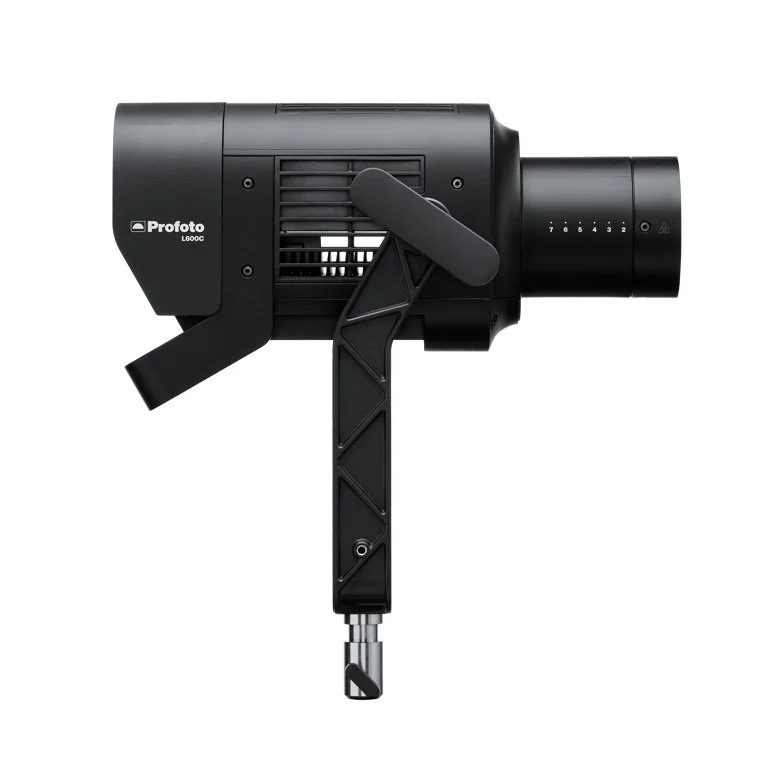
Profoto L600C - Features
Compact, all-in-one light without ballast for faster setup and easy portability.
HydroCTech™ liquid cooling system for quiet, efficient performance in a lightweight housing.
Weighs just 6.1 kg (13.4 lbs) — setting a new standard for power-to-weight ratio.
Powerful 600W Core-6™ RGBWWW LED engine delivering precise CCT control 2000-15000K, and outstanding colour rendering( TLCI 99).
Optional light modes with 16 million colour selections and over 300 preset gels.
Flicker-free 16-bit dimming from 0.1% to 100% for seamless precision control.
Native Profoto mount and umbrella holder compatible with over 100 light shapers.
Flexible connectivity via built-in DMX, Timo-Two CRMX, Bluetooth, and Profoto Air.
Profoto Air flash mode enabling HSS flash with 16 million colours and no recycle time.
You can find the L600C on the official Profoto website here: Profoto L600C (600W)
And the Profoto L600D on the official Profoto website here: Profoto L600D (600W)
I've always wanted my photography education on here to be free, so although there is no paywall to any of my -Technique Tuesdays-, any and all support is greatly appreciated. ❤️
PLUS: Donate any amount and I’ll send you a link to the hi-res print version of my studio lighting book.
||
PLUS: Donate any amount and I’ll send you a link to the hi-res print version of my studio lighting book. ||

JHP Livestreams…
I livestream every other Tuesday night via YouTube and there I answer your questions, critique your shots, take community images into Photoshop to work on them and discuss all manner of lighting tips and techniques. I look forward to seeing you and your work there real soon. Jake Hicks Photography - YouTube
