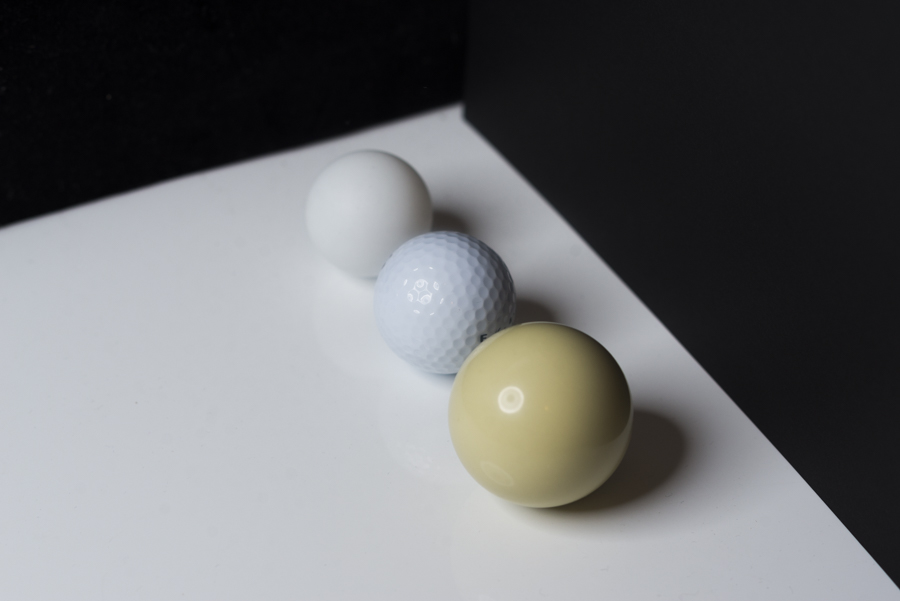
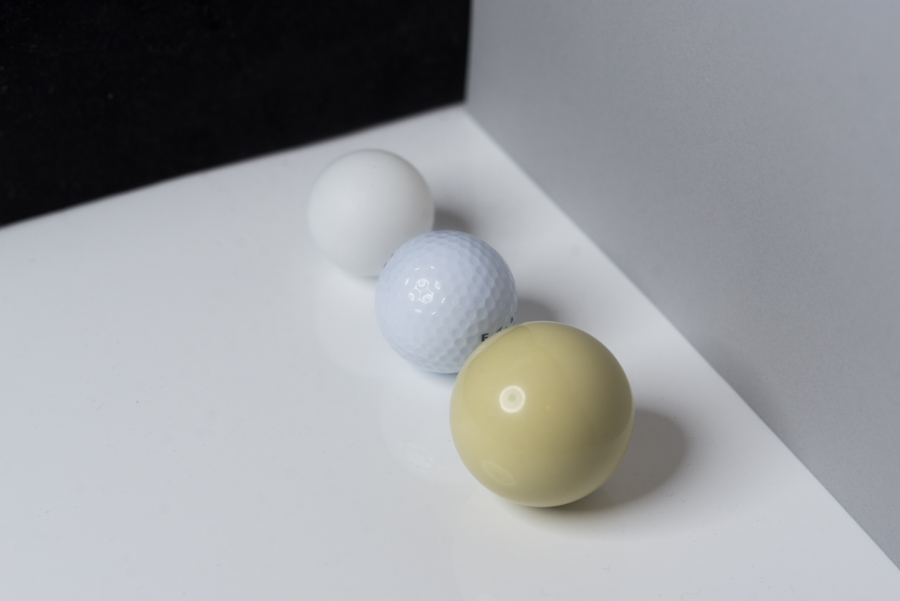
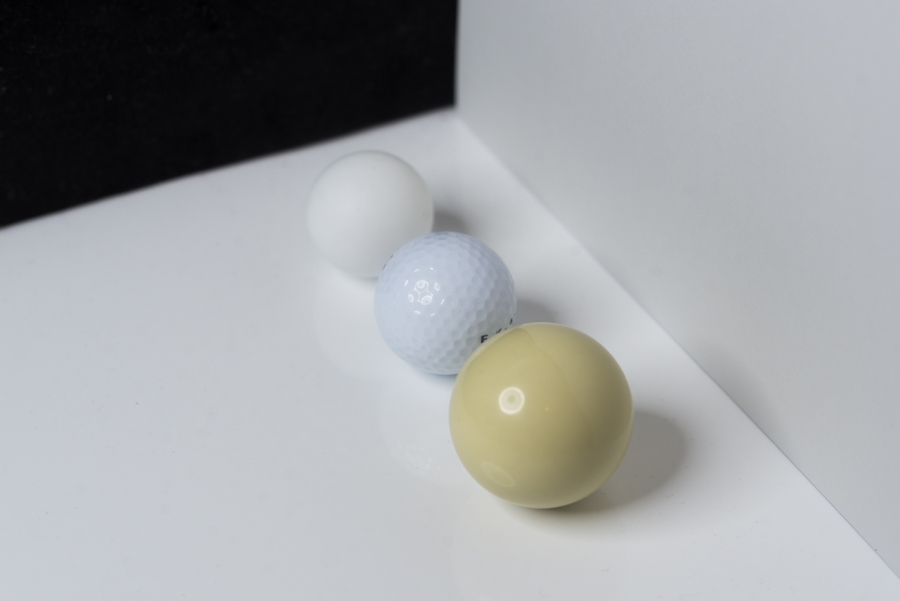
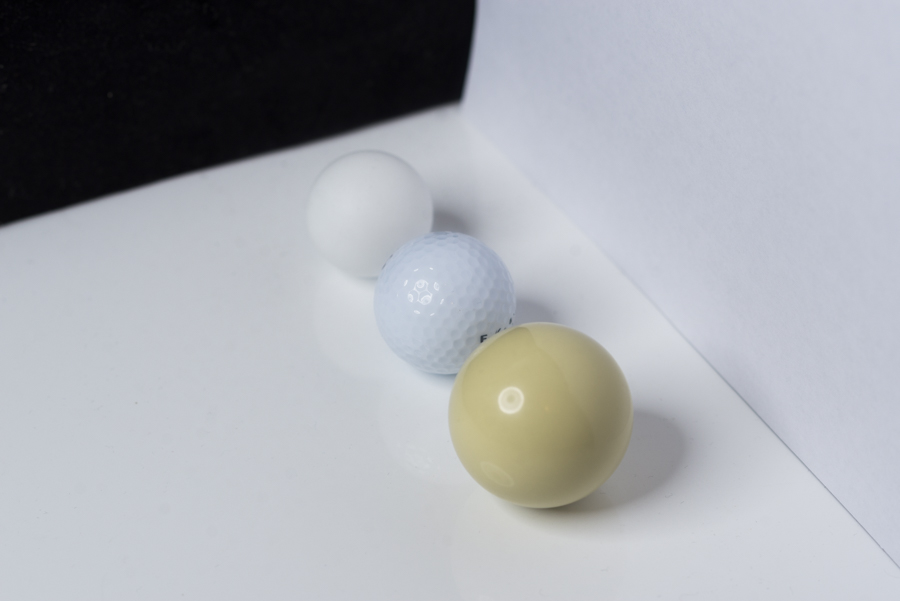
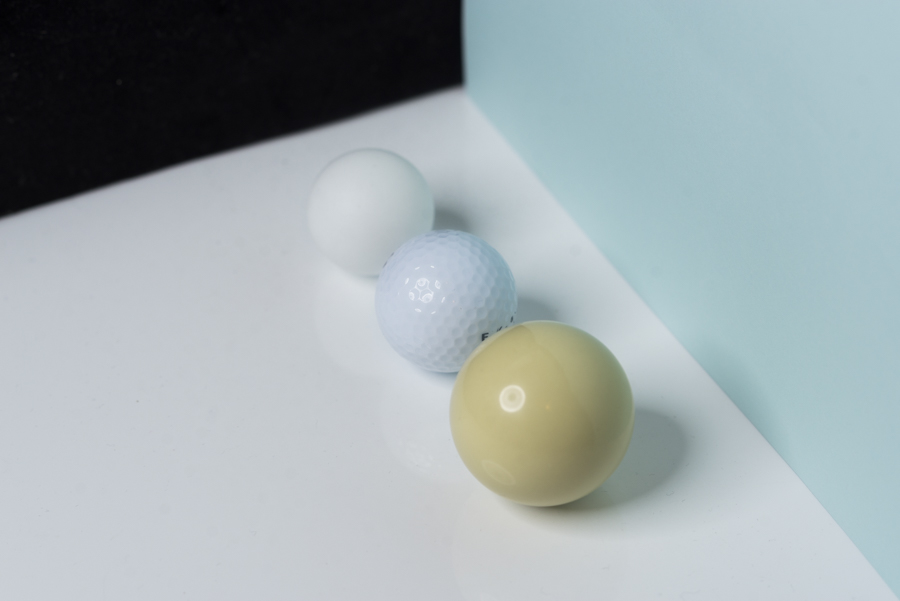
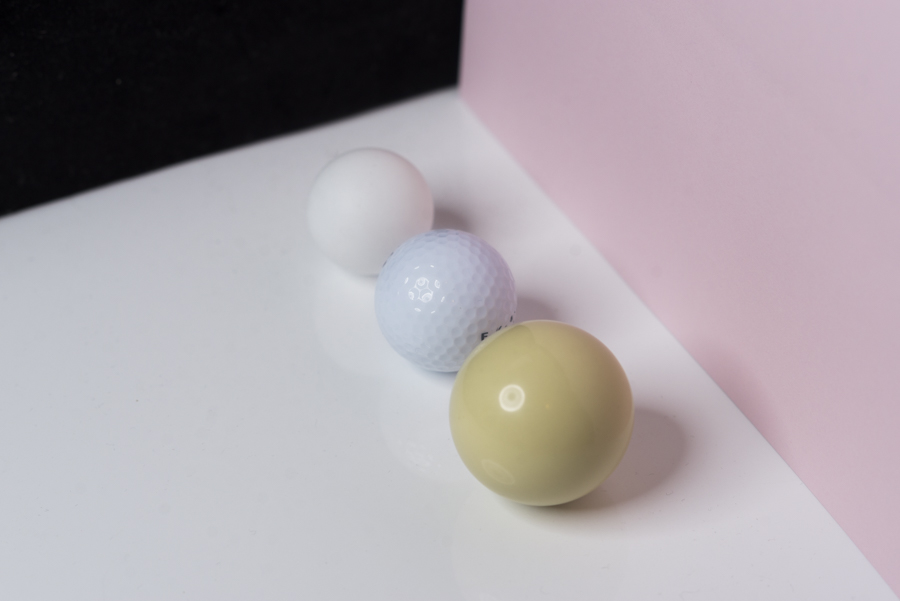
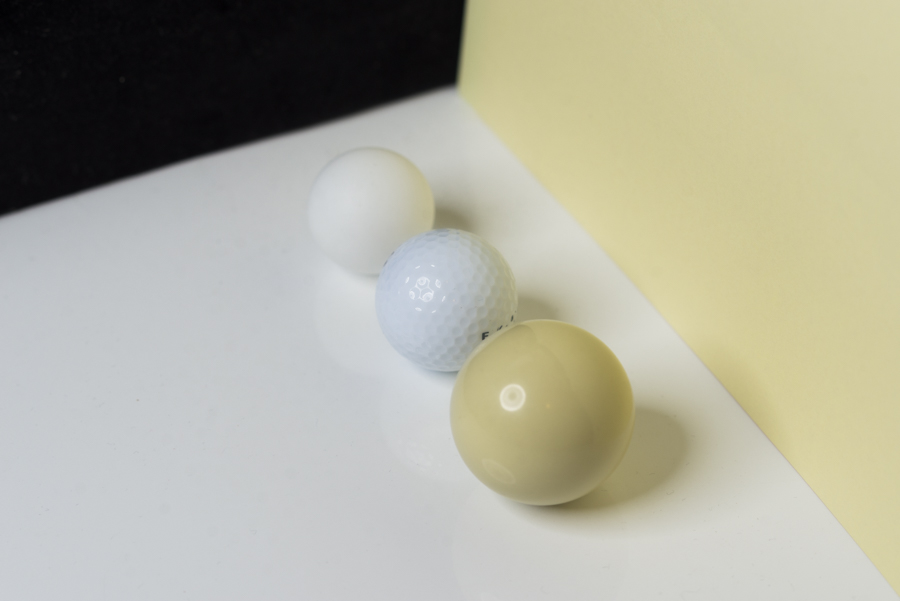
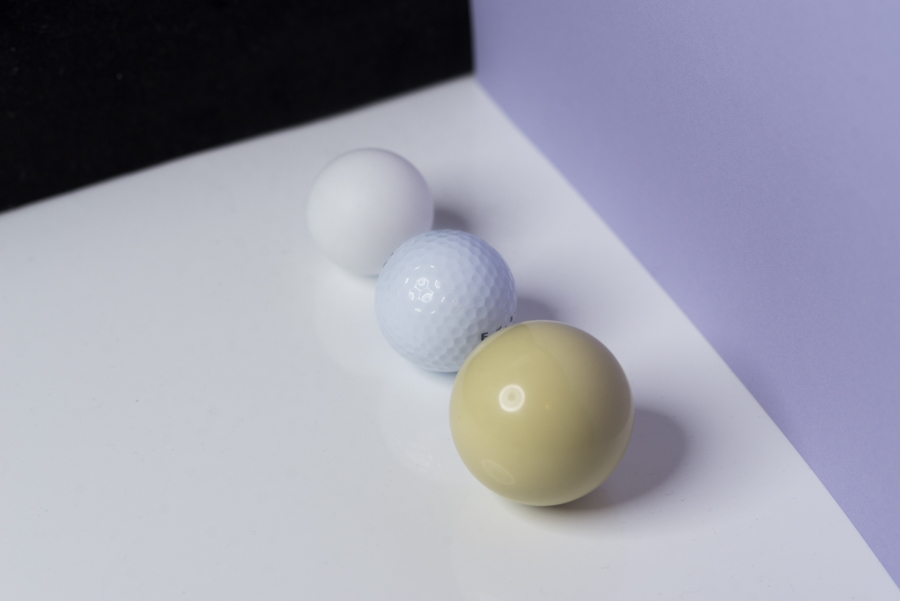
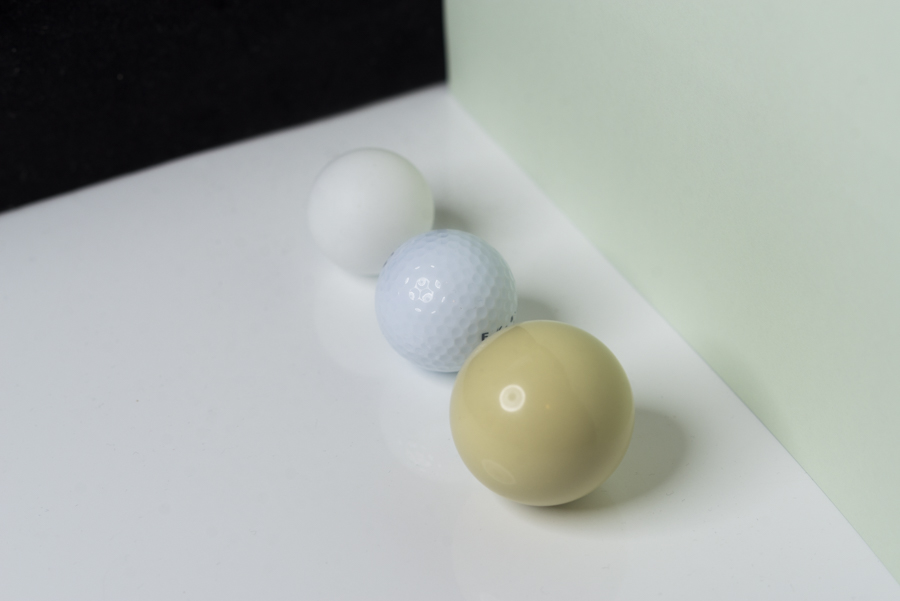
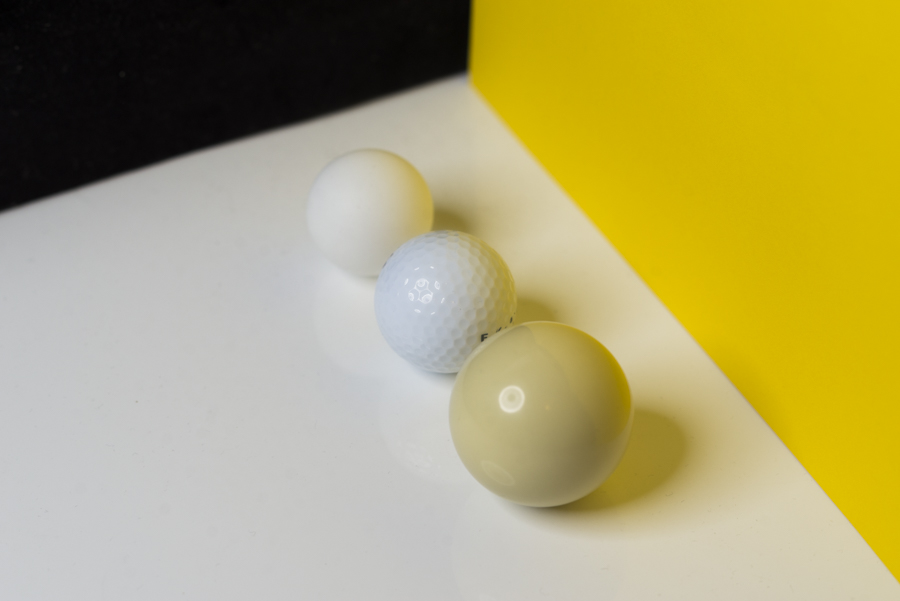
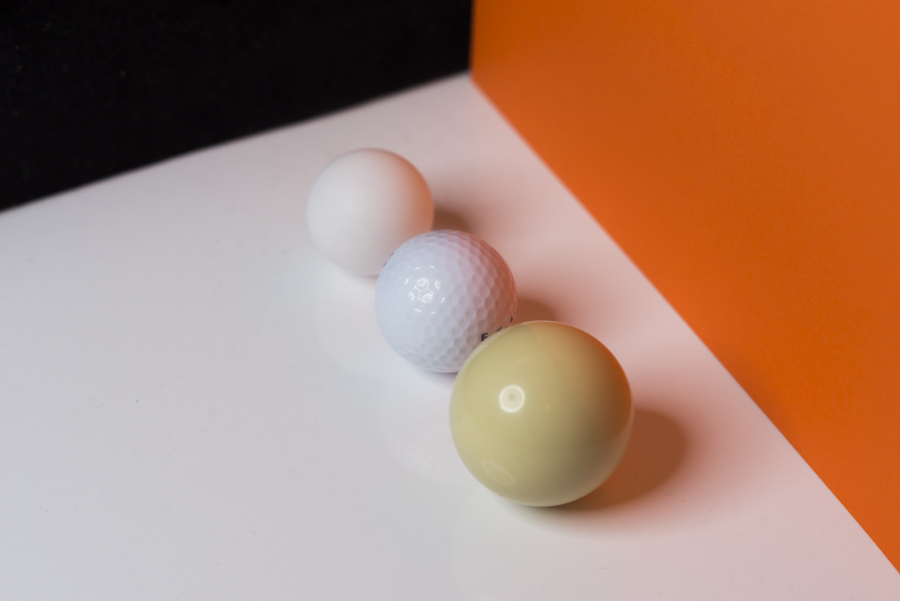
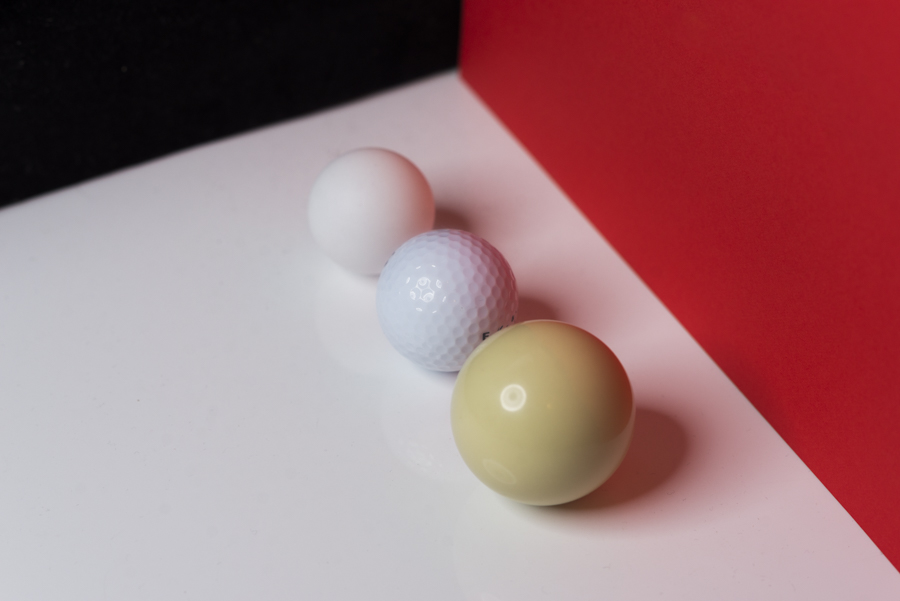
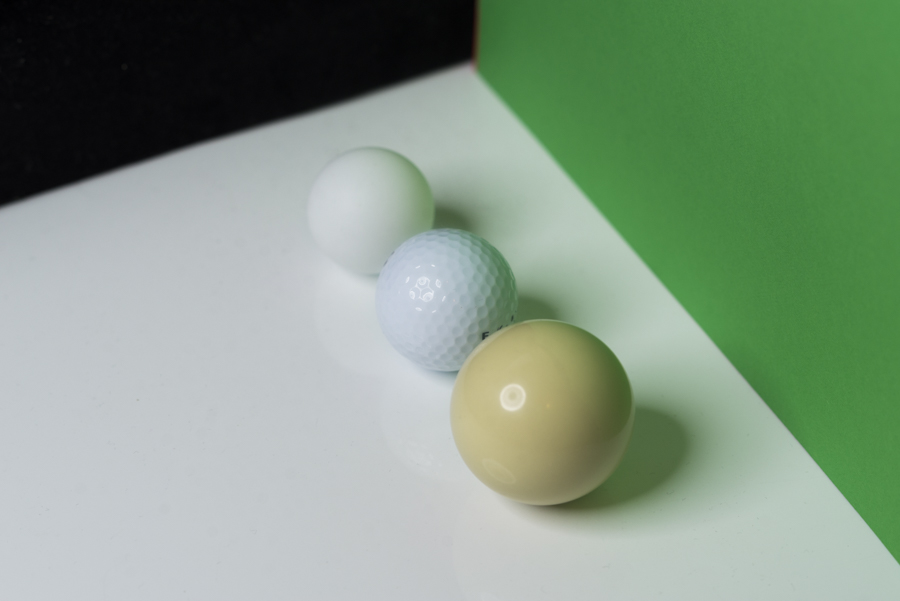
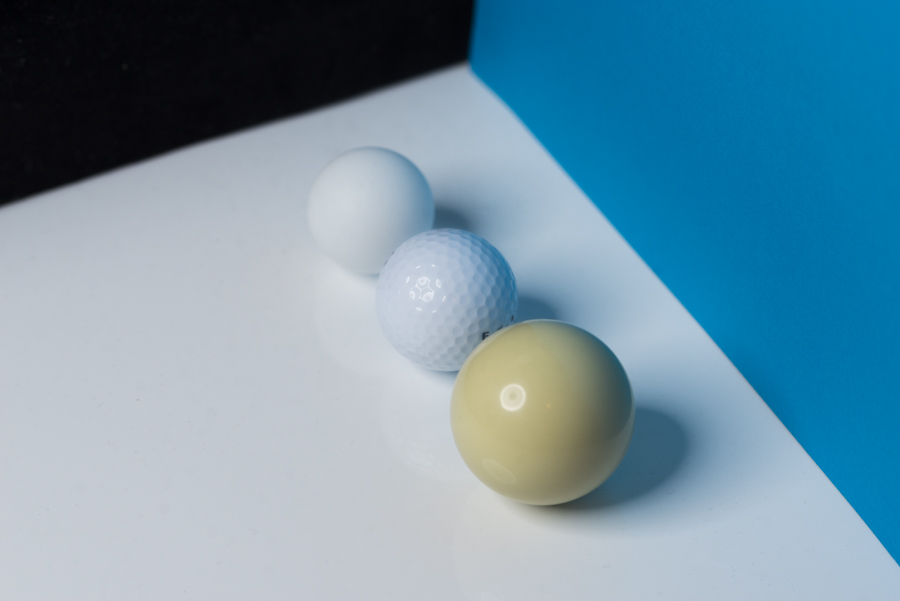
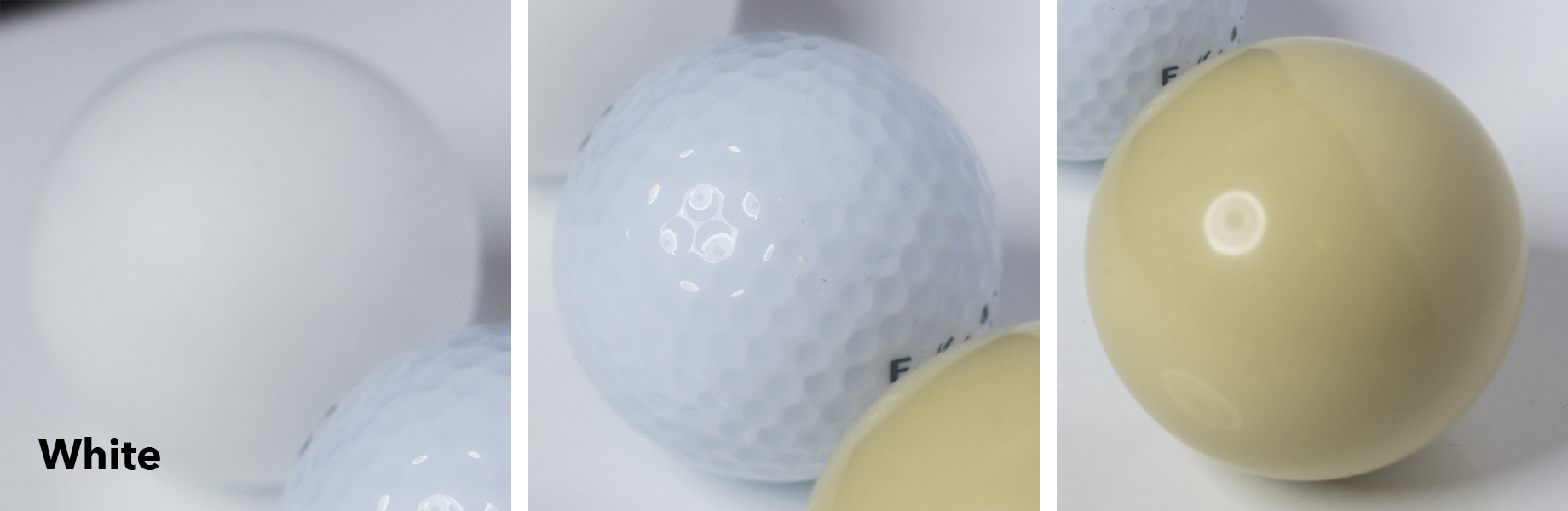
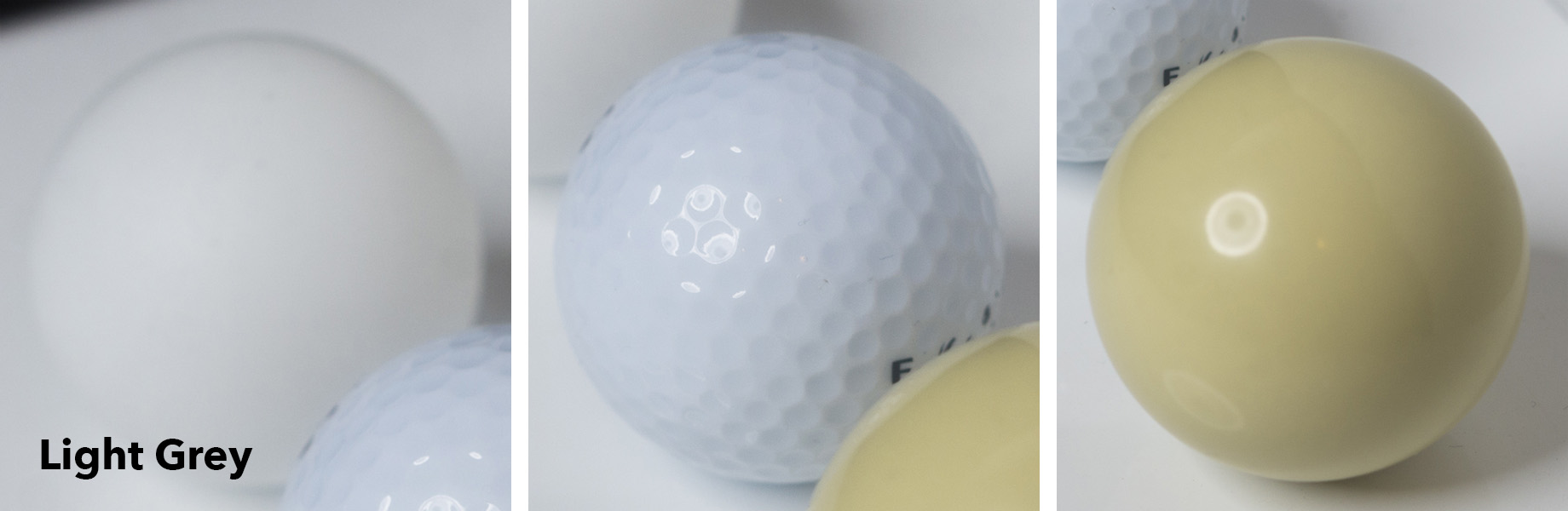
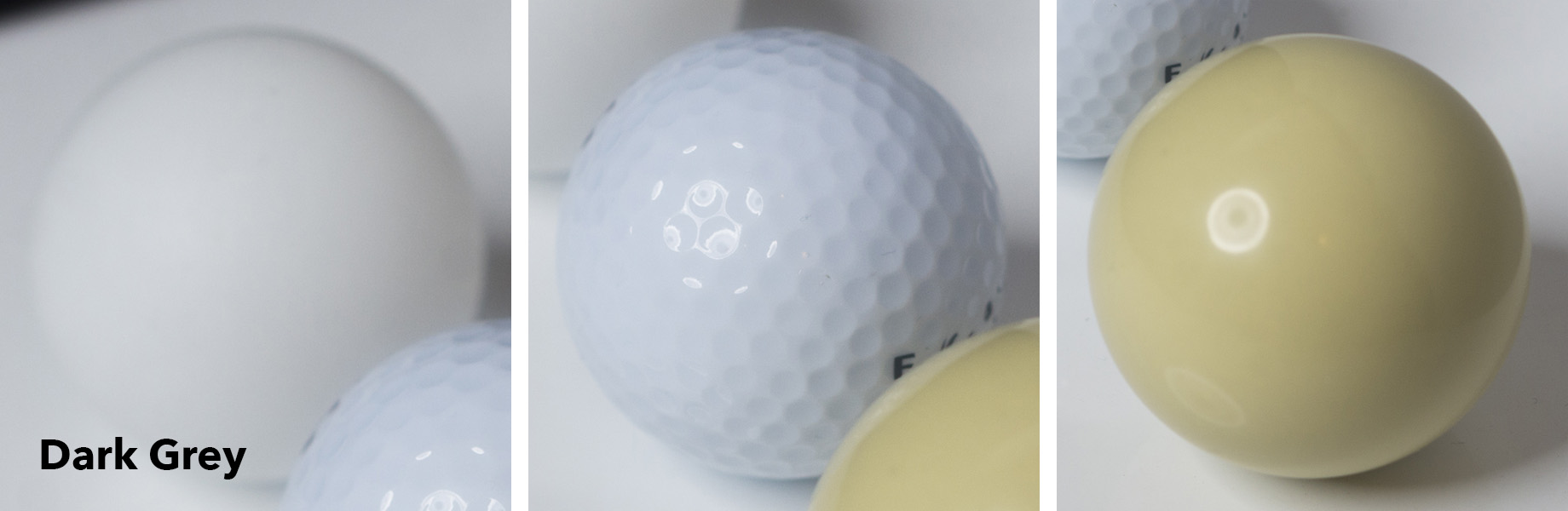
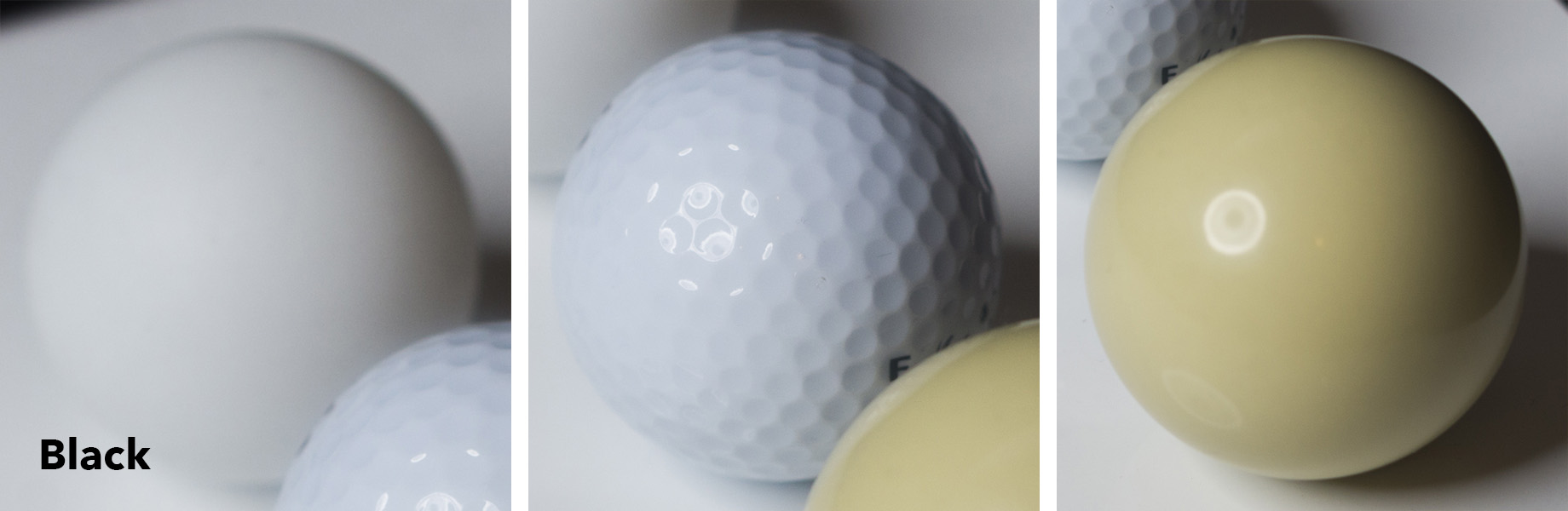
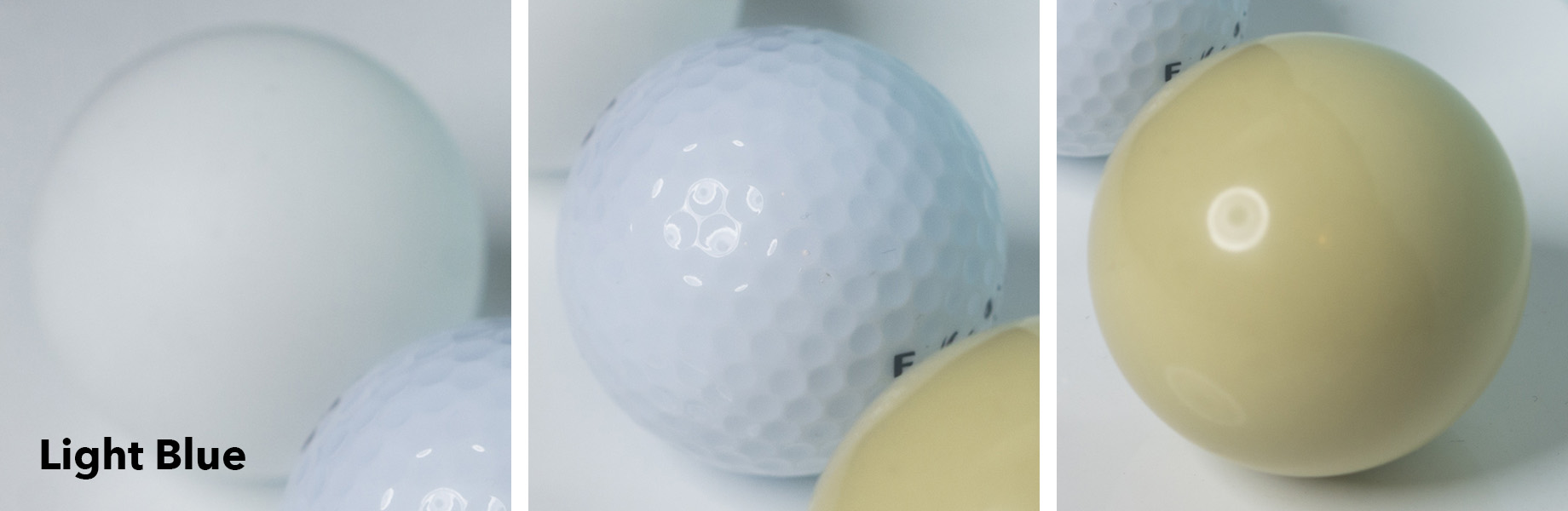
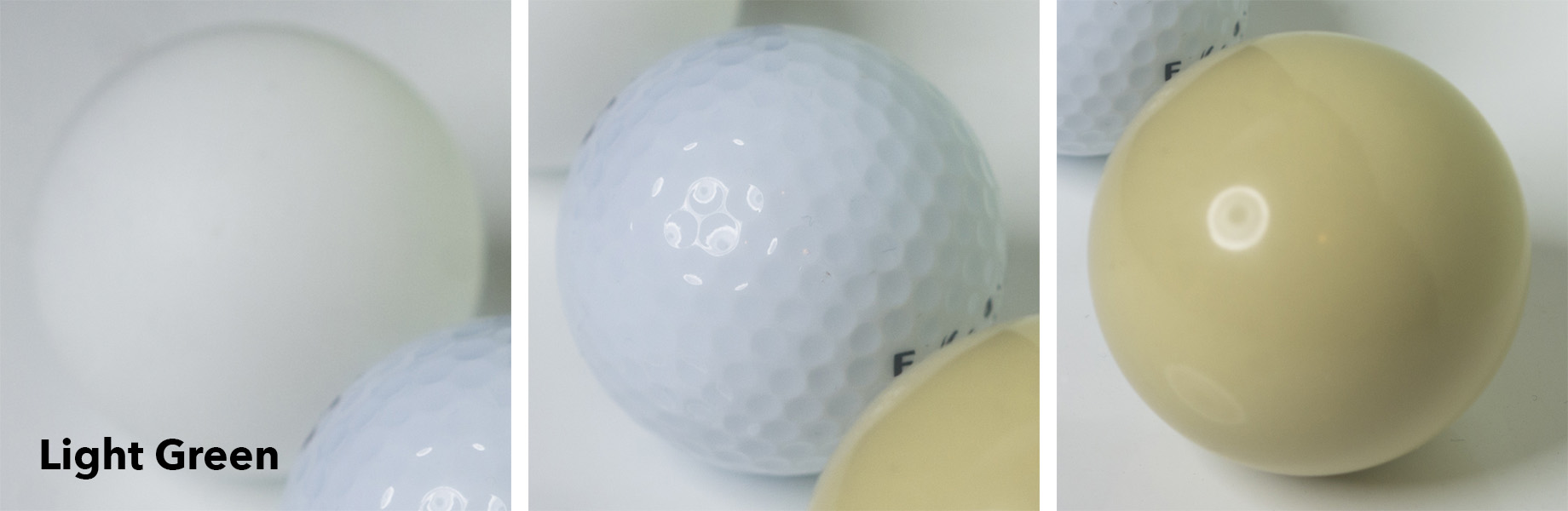
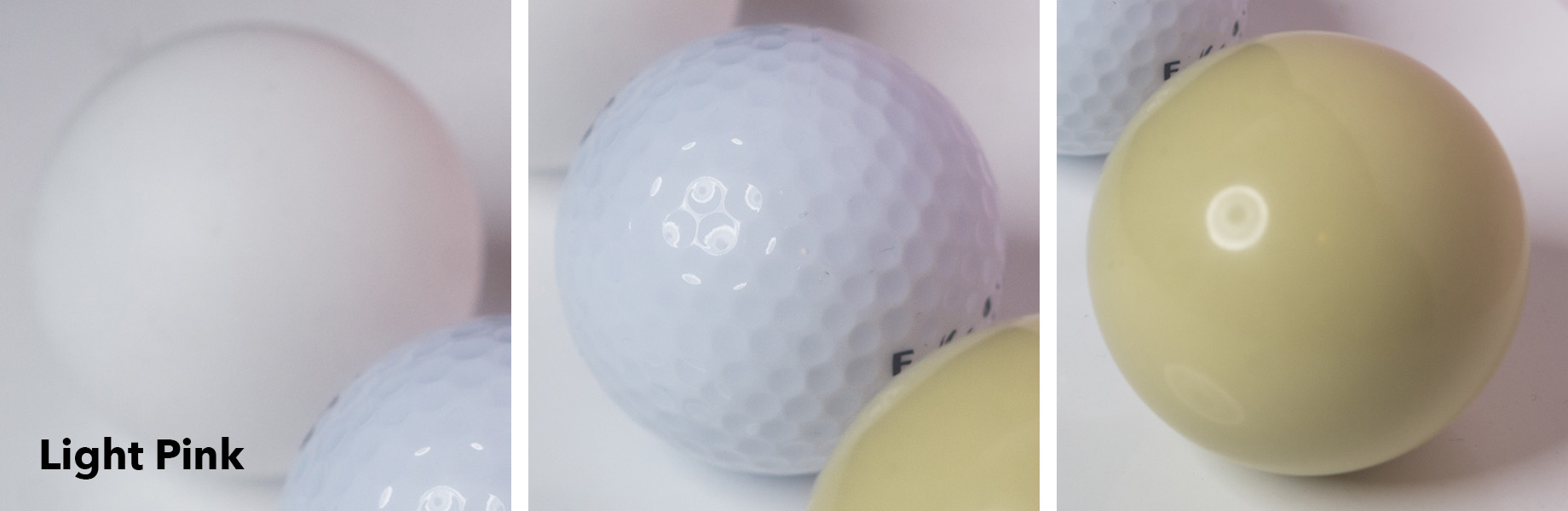
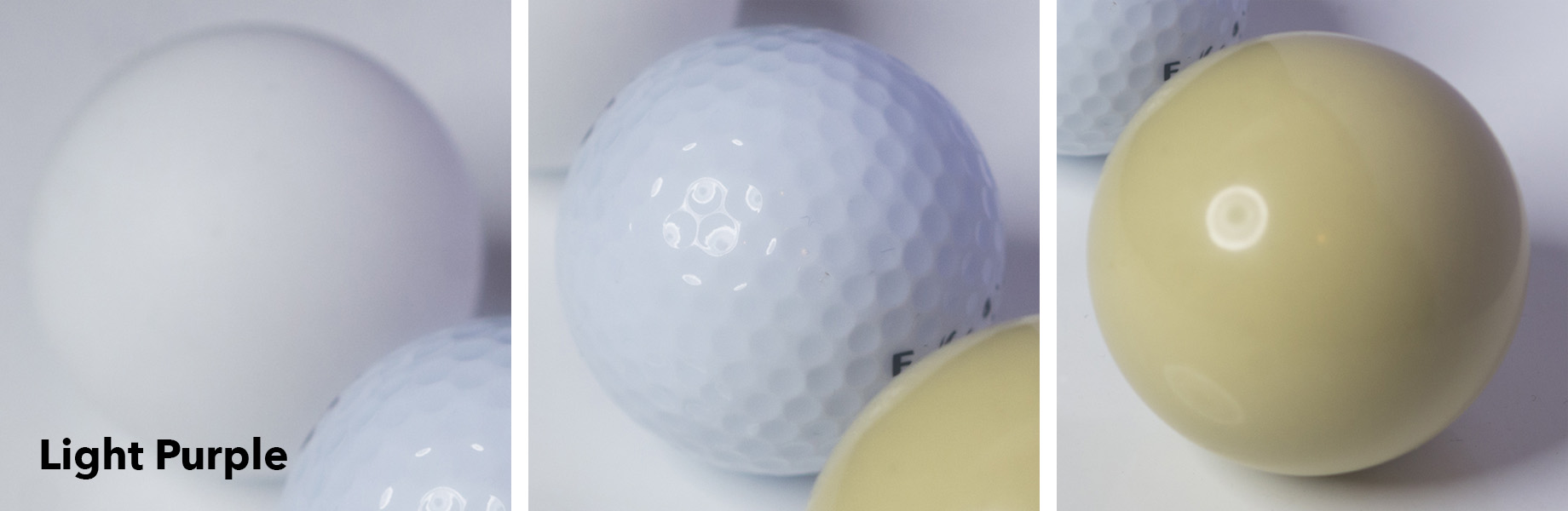
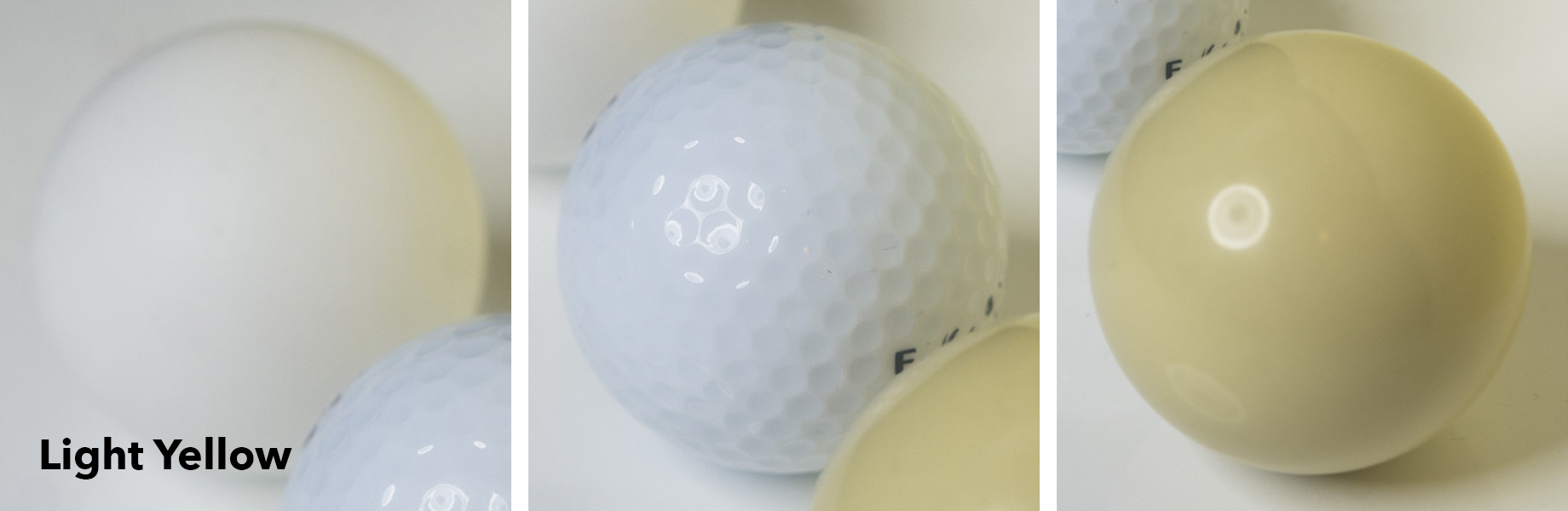
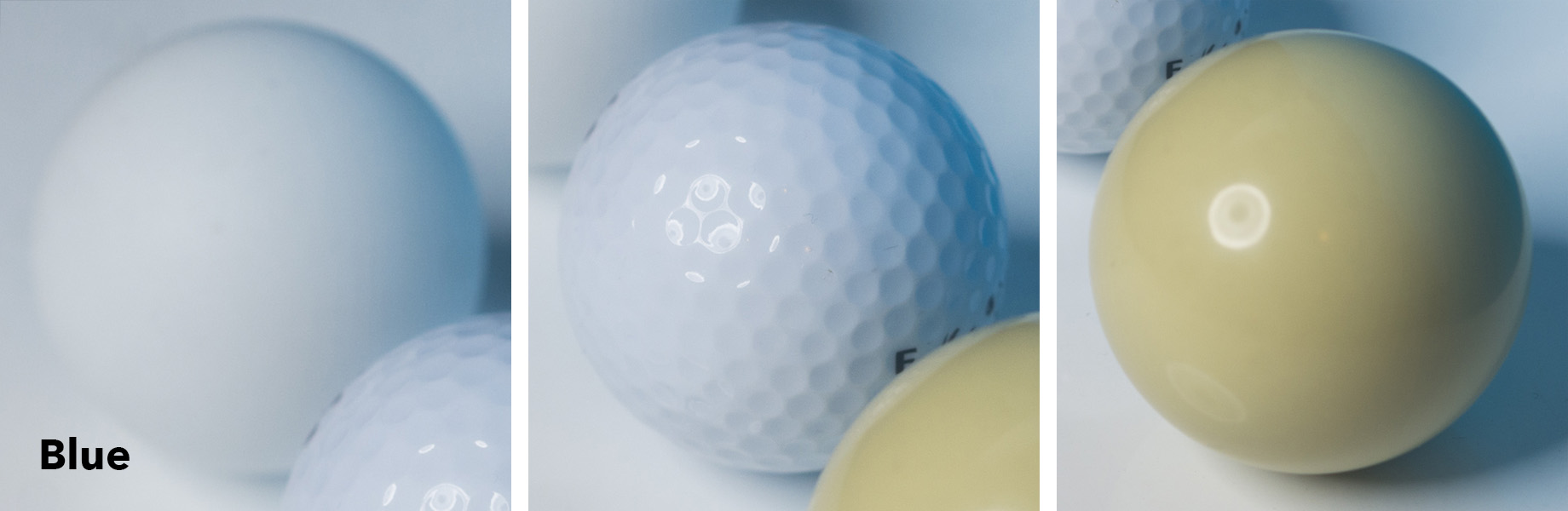
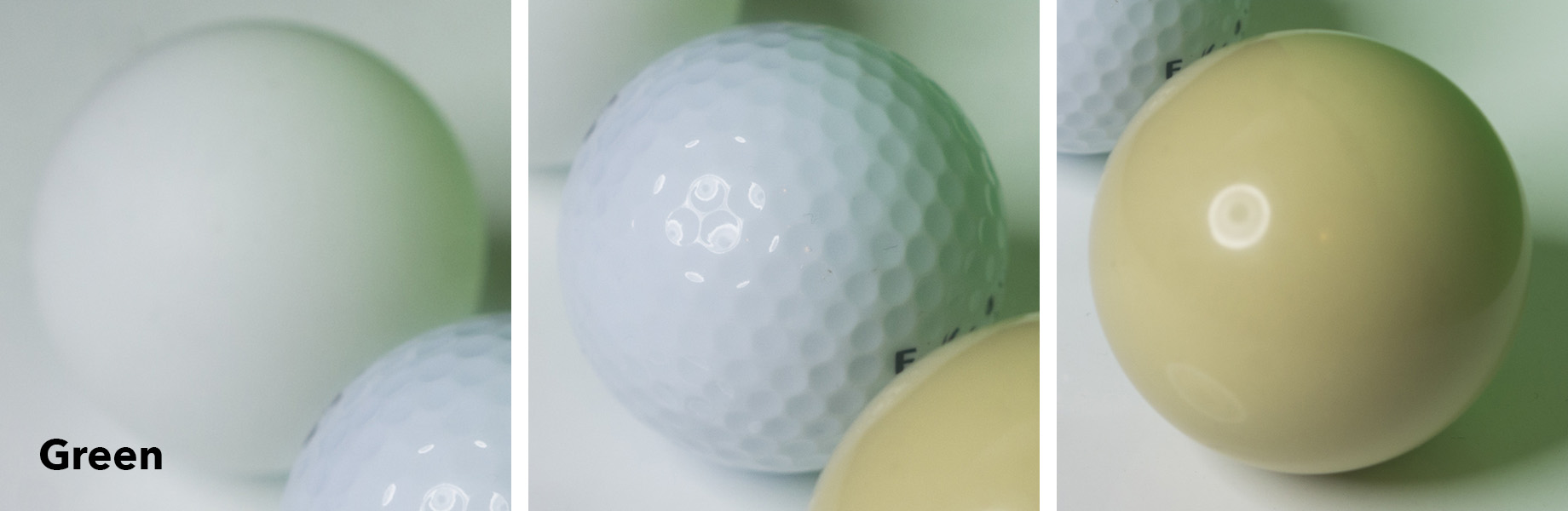
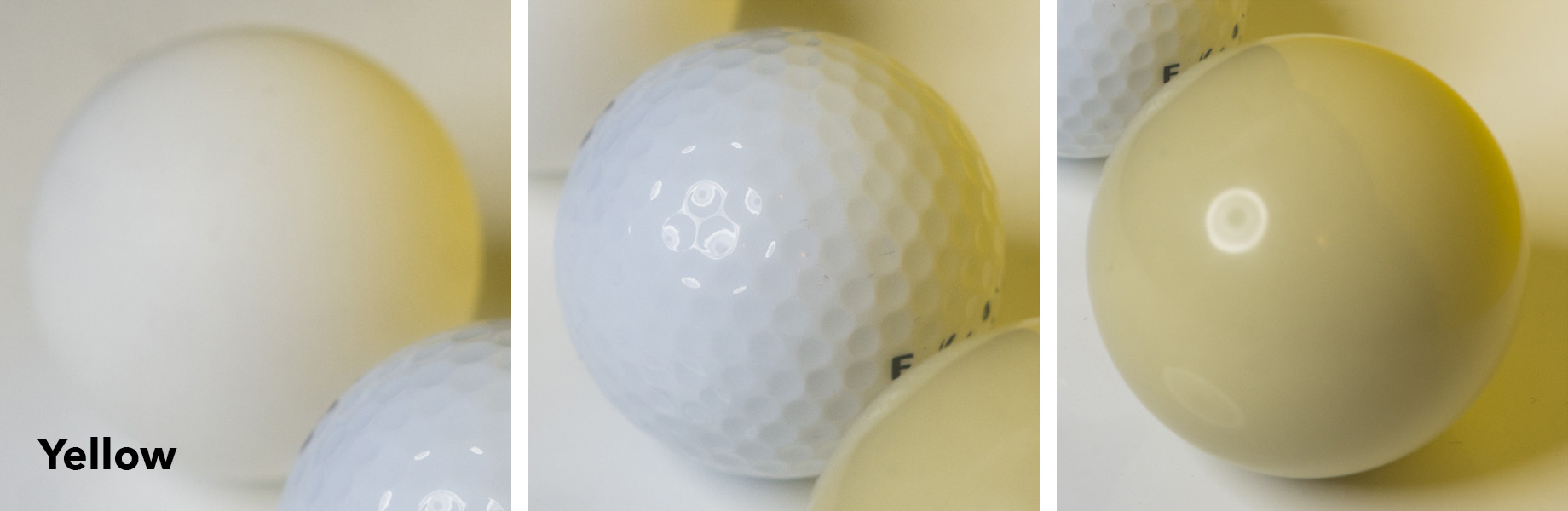
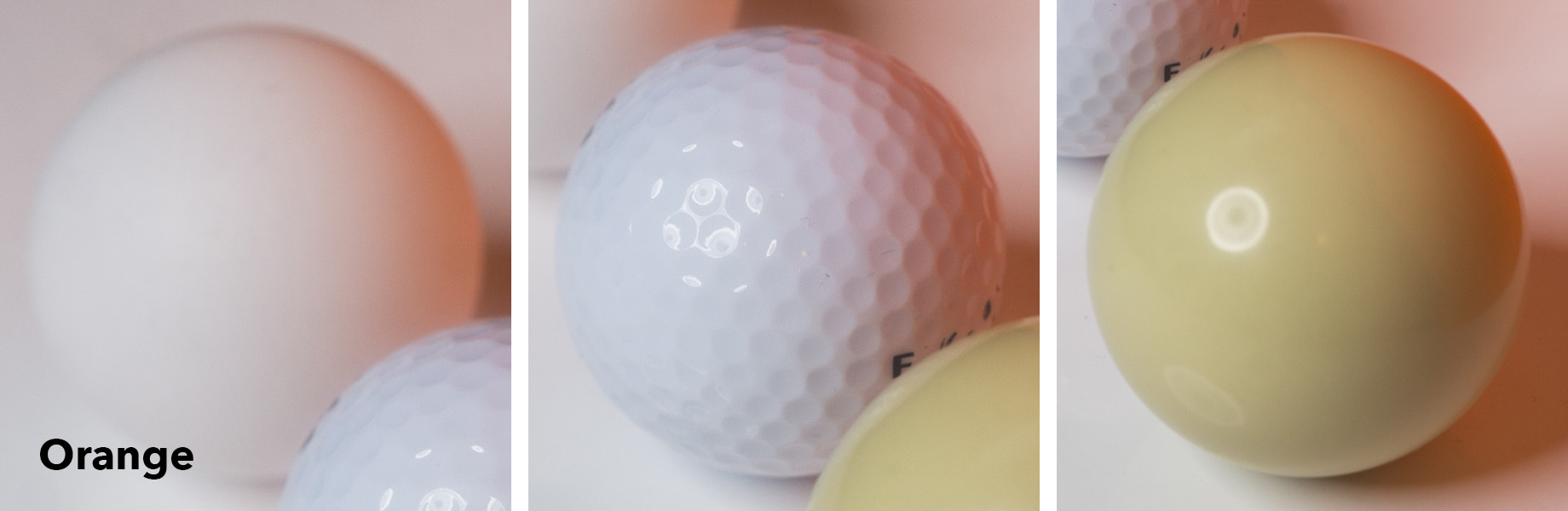
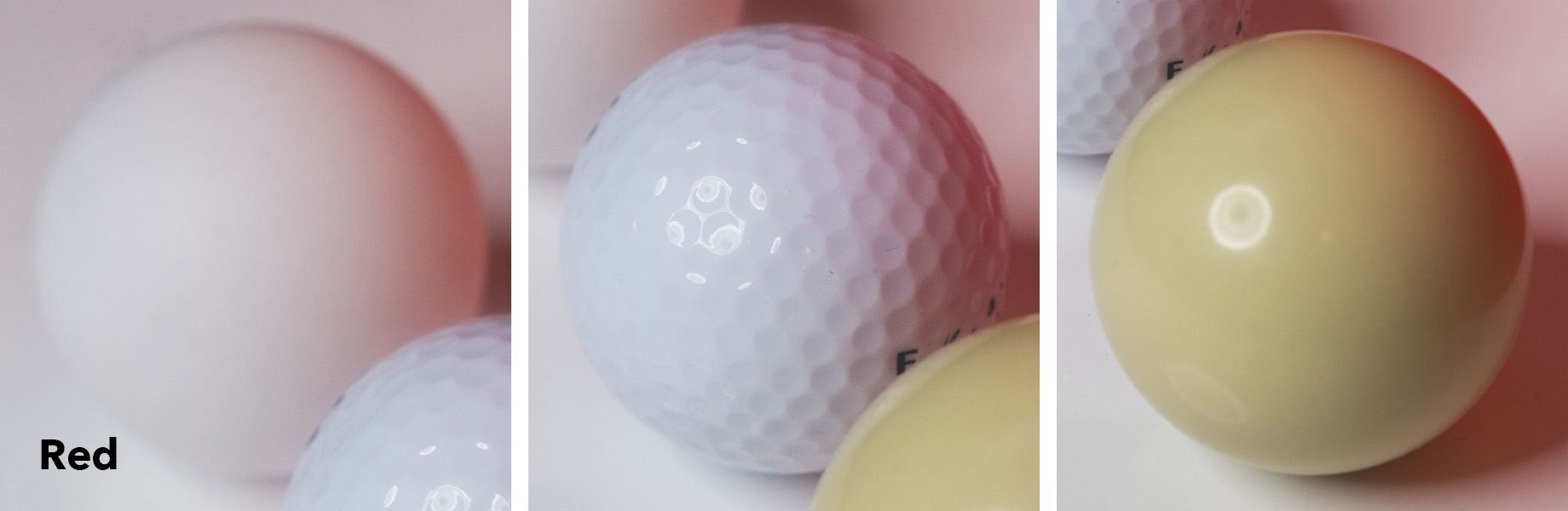
The good news is that you can use this colour contamination effect to your advantage if you're clever. Remember that this radiosity isn't exclusive to colour, you can use blacks and greys to add dimension to your subjects and objects. You'll often see studio photographers using black polyboards (large polystyrene boards) either side of the model to control the light, this not only controls the light but also adds a lot of shape through shadow in the process. I will always carry black velvet sheets with me on location to limit the bounce of light around a subject but I also have sheets of grey card in the studio that are less severe than black to add a little definition to the features where necessary. In the sphere comparison photos above, look at the light grey and dark grey images compared to the black and white images. See how they shape the spheres differently though shadow? Use this to your advantage either in the studio or on location. Also consider taking a white sheet with you on location too. Along with my black velvet I always have a white sheet with me that I can throw up to either bounce in some light or limit the colour contamination of a nearby coloured surfaces.
Fire your assistant if they look trendy!
Many years ago I was photographing fashion in natural light at the beach. A pretty easy job but the issue was that when I got the images back and started working on them I saw a very ugly and insipid looking greenish tinge to some of the clothing and skin. It was only apparent in some of the shots and it was always localised to certain areas. It took me a very long time to work out what this was until I remembered that my assistant on the day had a bright yellow/green t-shirt on. In some of the shots he was in very close to the model holding a reflector just out of shot but not only was he bouncing in light from the reflector he was also bouncing in light from his hideously ugly t-shirt.
People joke about my grey sweatshirt but trust me, if you've every tried to colour balance out greenish tinges to skin you'll switch to looking boring as hell like me in a heartbeat. When I was assisting all those years ago back in London in the film days, black shirts were mandatory on set, no ifs or buts. Now the sets are a kaleidoscope of colour balancing nightmares. Take a look at the BTS of the film industry, how many lighting technicians are you seeing wearing day-glo?! Not many.
Of course I know I sound like a grumpy old man hahah ;) and although it's a very real problem it actually only affects certain situations like still life shooters with shiny surfaces or macro beauty work etc. Still life shooters who photograph metal or other shiny surfaces nearly always wear all black to avoid this. Either way, it's very wise to be aware of it and advise assistants on set to dress appropriately where necessary.
Closing Comments
I appreciate this weeks blog wasn't very salacious or exciting but I think this colour contamination effect is an incredibly overlooked aspect of modern photography due to the 'I'll fix it later in post' mindset. Not only is it very time consuming to fix it in post but it's also practically impossible in certain situations due to the colours being outside of the white balance spectrum. If you're aware of the colours around you when you're shooting then you can limit the effect or use it to your advantage where necessary.
Points to remember
- Think about the colour of surfaces around your subject.
- Should I use another area like a white wall nearby instead.
- Look at how multiple subject colours interact with one another when in close proximity.
- Bring a black and white sheet of fabric with you on location to throw over brightly coloured objects if you need to.
- Consider getting some dark and light grey card for the studio and use it as a bounce board instead of white. This will give more shape to you subject than just a white bounce board.
- Think about what the people on set are wearing. If assistants are going to be close to the final shot, get them to change any brightly coloured outfits.
- Think about what YOU are wearing. If you're a macro beauty shooter who will be inches away from your subject, you definitely don't want to be wearing bright colours as it will most certainly have an effect on the shot.
Thanks as always for reading, I know we live in a time of soundbites and Instagram so all the more respect to yourself for engaging for this long :) I hope this little bit of knowledge will help you at some point. If you have any questions then let me know and I'll do my best to answer them as quickly as I can.
Also, If you're new here then feel free to join our very active community of like minded lighting-nerds on my Facebook page, I'm always discussing lighting ideas and offering feedback on community images. If you'd like to stay up to date on more photography related tips and techniques then sign up to my mailing list where I'll send you a monthly roundup of all my articles (plus signing up gets you a free 10 page studio lighting pdf too :) ). Thanks again and I'll see you all in the next one.
P.S. I apologie for more than likely misusing 'affect' and 'effect' in multiple places. I tried to mix them up to give myself the best chance of getting some of them right ;) But I do apologise if this triggered you and let me know where I messed up and I'll make the changes :) Thank you in advance.